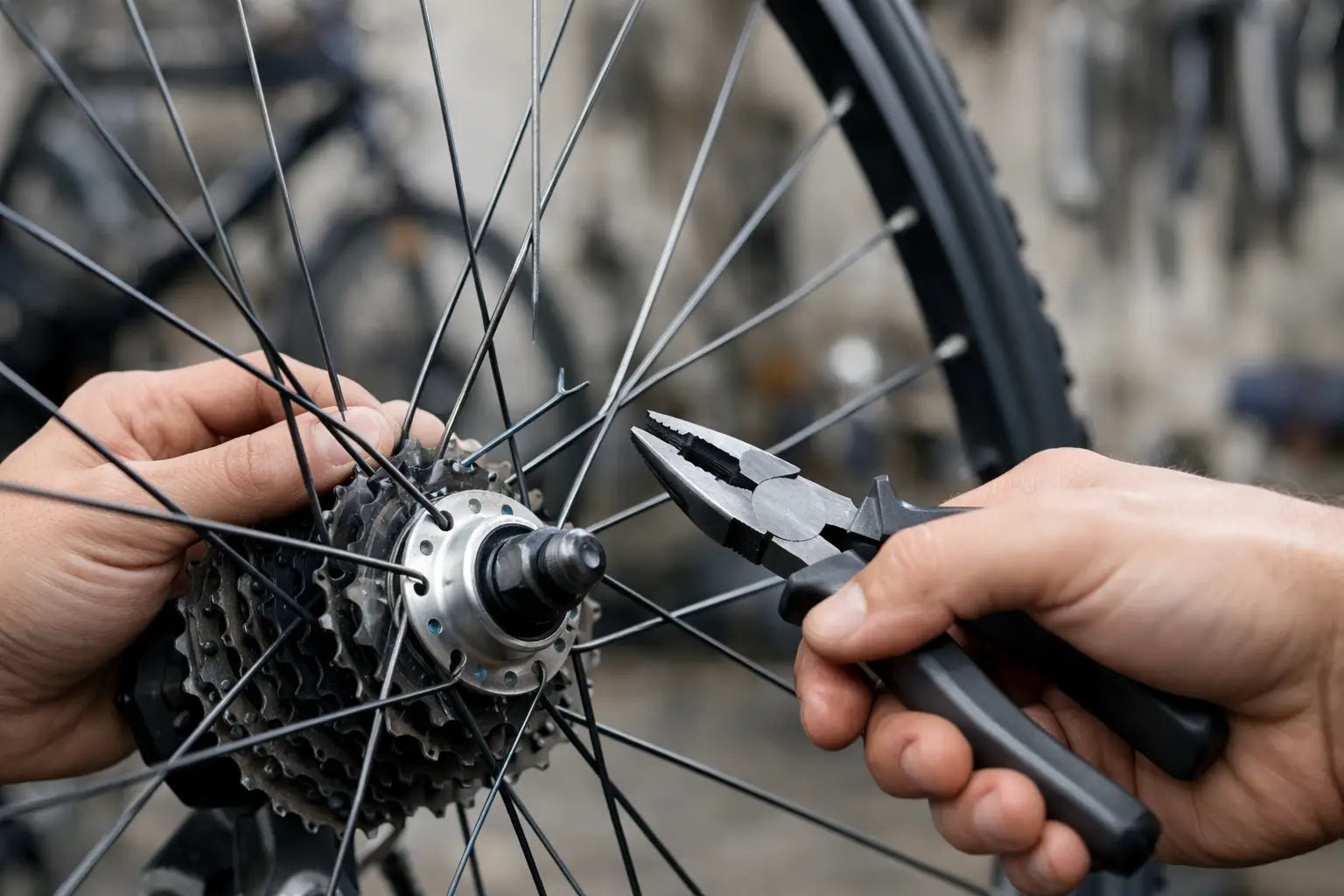
A sharp ping from the wheel, followed by a rub at the brake or a wobble on the ride home, is not a noise to ignore. So, can a broken bike spoke be repaired? Usually, yes - but the proper repair is normally a spoke replacement, followed by careful wheel truing and tensioning. Simply removing the broken spoke and carrying on can turn a small workshop job into a damaged rim, more broken spokes, or an unsafe wheel.
A wheel is a tensioned structure, not just a rim with wires running to the hub. Every spoke shares the load. When one fails, the load moves to the spokes around it, the rim can pull out of true, and the wheel becomes weaker where you need it most.
Can a broken bike spoke be repaired, or replaced?
In most cases, the broken spoke itself is replaced rather than repaired. A snapped spoke cannot be safely joined, welded or taped back together. It has already failed under tension, and any makeshift fix is likely to fail again.
The good news is that one broken spoke does not automatically mean a new wheel. If the rim is sound, the hub is in good condition and the remaining spokes have not suffered widespread fatigue, a technician can fit a correctly sized replacement spoke, bring the wheel back into alignment and balance its tension.
That last part matters. A spoke fitted without proper tensioning is not a finished repair. Too little tension leaves the wheel flexible and prone to loosening. Too much can crack a rim or overload neighbouring spokes. The aim is a wheel that runs straight, round and evenly tensioned for reliable riding.
Why bike spokes break
Spokes commonly break at the elbow near the hub, at the threaded end by the nipple, or occasionally through the middle. The location gives a workshop useful clues about the cause.
A single break can be bad luck: a stick caught in the wheel, impact damage from a pothole, a knocked bike in a rack, or an older spoke reaching the end of its service life. More often, though, the break reveals an underlying wheel-tension problem. Spokes that repeatedly go slack and tight as the wheel turns are more likely to fatigue and snap.
Rear wheels take particular punishment. They carry more rider weight, transmit pedalling force and, on a geared bike, have uneven spoke angles because of the cassette. E-bikes add motor torque, higher average speeds and extra system weight. That does not mean an e-bike wheel will inevitably fail, but it does mean wheel quality, spoke tension and regular checks matter more.
A broken spoke can also follow rim damage. If a rim has a dent, a crack around a spoke hole, severe corrosion or worn brake tracks, fitting a new spoke may only postpone a bigger failure. In that situation, rebuilding the wheel with a new rim - or replacing the wheel - is often the safer value choice.
Is it safe to ride with a broken spoke?
It depends on the wheel, the type of bike and how far you need to go, but a broken spoke should be treated as a prompt repair. Stop riding immediately if the rim rubs the brake, the wheel visibly wobbles, the tyre catches the frame or fork, or several spokes feel loose. Continuing can pull the wheel further out of shape very quickly.
If the wheel remains reasonably straight and you are stranded, a short, gentle trip home may be possible after securing the loose spoke so it cannot catch in the drivetrain or brakes. Do not ride hard, carry extra loads, descend fast or use the bike for commuting until it has been checked. On a front wheel, especially one with a disc brake, stability can deteriorate without much warning. On a rear wheel, a loose spoke near the cassette can cause additional drivetrain damage.
For a cargo bike, a child-carrying bike or an e-bike, err on the cautious side. The forces involved are higher, and the consequences of a wheel failure are not worth gambling on.
What a proper spoke repair involves
A professional spoke repair starts with inspection, not just fitting a new part. The technician checks the rim for cracks and flat spots, looks at the hub flange and bearings, assesses corrosion, and checks whether other spokes are loose or fatigued.
The replacement spoke must match the wheel. That means the correct length, gauge and type, whether it is a standard J-bend spoke, straight-pull design or a specific bladed spoke. On some rear wheels, drive-side and non-drive-side spokes use different lengths. Modern e-bike and hub-motor wheels can be more specialised again.
Once fitted, the wheel is trued laterally and radially. In plain terms, it is adjusted so it does not weave side to side or hop up and down. The spokes are then tensioned evenly, stress-relieved and rechecked. Stress-relieving is the controlled settling of spoke bends and crossings so the wheel is less likely to lose tension after the first few rides.
At The Bike Shack, that approach turns a snapped spoke into a wheel repair built for the road ahead, not a quick adjustment that leaves you returning with the same problem next week.
When one broken spoke means a wheel rebuild
There is a point where replacing individual spokes stops being the most sensible option. If several spokes have broken over a short period, the remaining ones may be approaching the same fatigue limit. Replacing only the latest failure can become a cycle of repeat workshop visits.
A rebuild is worth considering when the rim is still suitable but the spokes are aged, corroded or repeatedly losing tension. It gives the wheel a fresh set of correctly matched spokes and nipples, built around the existing hub. This can be an excellent upgrade for a dependable commuter or a bike that has gained an electric conversion kit.
Wheel replacement makes more sense when the rim is cracked, badly worn, significantly bent, incompatible with available parts, or when the hub bearings and freehub are also at the end of their life. It can sound like the larger expense, but it may offer better long-term reliability than rebuilding around multiple worn components.
Can you replace a bike spoke yourself?
A confident home mechanic can replace a spoke on a simple wheel, particularly the front wheel of a rim-brake bike. You need the right spoke, a nipple, a spoke key, a way to judge true and tension, and patience. The challenge is not threading in the spoke. The challenge is restoring even tension without introducing a buckle or over-tightening one section of the rim.
Rear wheels are more involved because the cassette may need removing to access the spoke head. Disc rotors, internal gear hubs, hub motors and unusual spoke patterns add further complications. A wheel that looks straight in a stand can still have uneven tension that shortens its life.
If you are learning, replacing a spoke can be a useful skill. If you rely on the bike daily, carry passengers or ride an e-bike, professional wheel truing is usually the faster route to confidence. It also gives you an informed answer on whether the rest of the wheel is healthy.
How to reduce future spoke failures
Avoiding potholes is helpful, but it is not the whole story. Keep tyres inflated to a pressure appropriate for your weight, tyre size and road conditions. Under-inflated tyres make rim strikes more likely, while excessive pressure can reduce comfort and grip.
Check your wheels occasionally by spinning them and looking for wobble. Gently squeeze paired spokes to feel for obvious loose ones - compare the feel around the wheel rather than trying to judge an exact tension by hand. If you hear persistent ticking, see a growing wobble or notice brake rub that was not there before, book a check before a spoke breaks.
For e-bikes, make wheel inspections part of routine care. More power is brilliant for hills, hauling kit and longer commutes, but it places greater demands on the wheel. A correctly built and maintained wheel keeps that extra performance working in your favour.
A broken spoke is rarely a reason to write off a bike. Get the wheel inspected early, replace the spoke correctly, and make sure the tension behind the repair is right. That is how a small repair stays small - and how your next ride feels smooth, strong and ready for the miles ahead.