
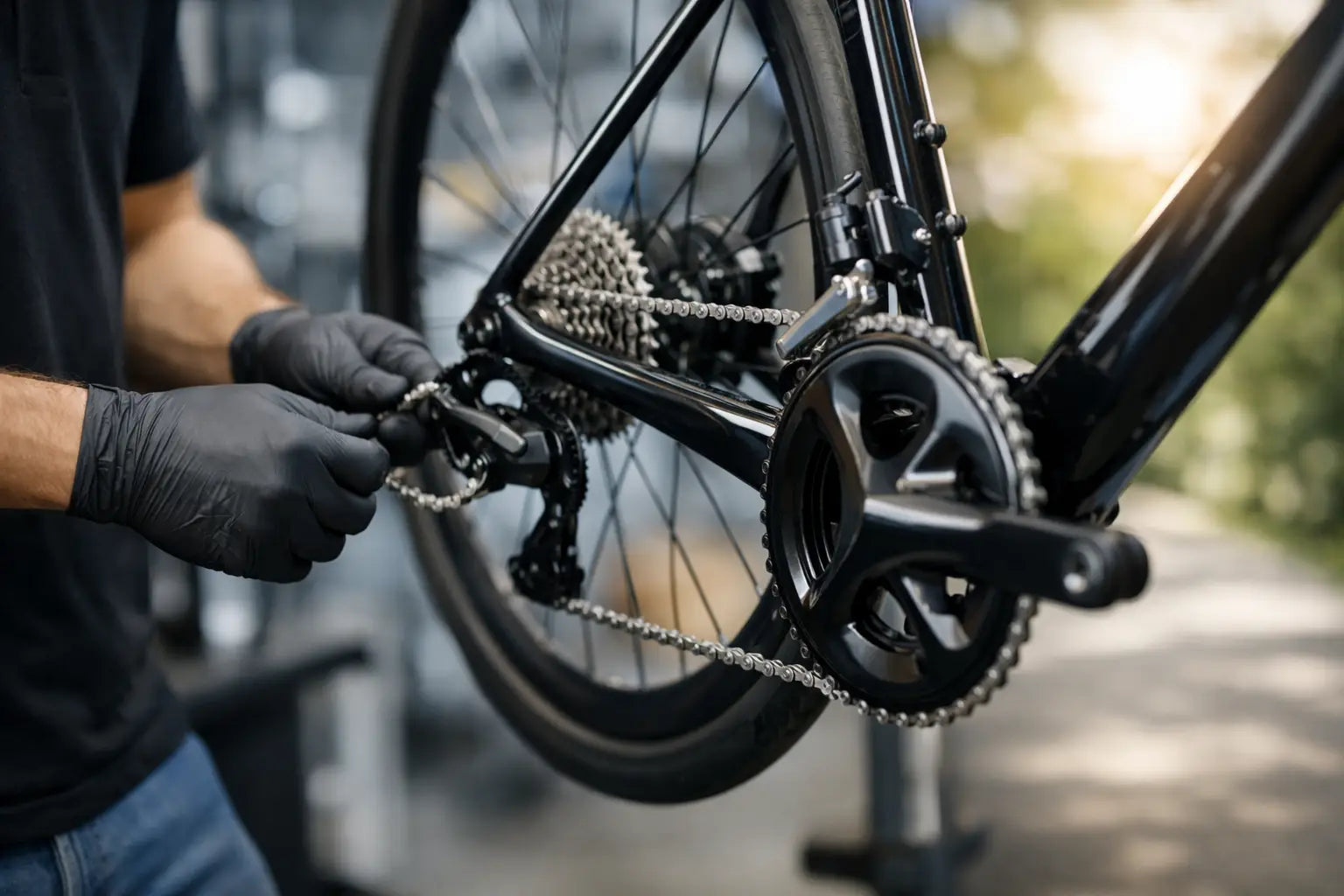
A drivetrain tuning service is one of the quickest ways to make a familiar bike feel properly sorted again. When every gear clicks into place, the chain runs quietly and pedal power reaches the wheel without hesitation, commuting feels easier and longer rides become far more enjoyable.
Your drivetrain does the hard work on every ride. The chain, cassette, chainrings, derailleur, shifters and cables operate as one system, often in rain, road grit and stop-start traffic. Small changes in cable tension, chain wear or derailleur alignment can soon turn crisp shifting into clicking, skipping and frustration.
What a drivetrain tuning service actually does
A proper tune is more than turning a barrel adjuster until the noise seems to disappear. A workshop checks how the whole shifting system is working under load and identifies whether the issue is adjustment, contamination, wear or damage.
The process normally begins with an inspection of the chain, cassette, chainrings, jockey wheels, gear cables and derailleur hanger. Chain wear is measured rather than guessed. A stretched chain can wear out the cassette and chainrings faster, so catching it early can save a much bigger parts bill later.
The drivetrain is then cleaned where appropriate and lubricated with the right product for the conditions. Too little lubricant causes noise and premature wear. Too much attracts dirt and creates a gritty paste that wears components from the inside. The aim is a clean, lightly lubricated chain that runs smoothly rather than a chain covered in excess oil.
Next comes the adjustment work. The mechanic sets derailleur limit screws, cable tension and indexing so the chain moves accurately across the cassette without overshifting into the spokes or dropping off the smallest cog. On bikes with a front derailleur, its height, angle and travel need equal attention to prevent chain rub and unreliable shifts.
A final road-style check through the gears confirms that the system works across the full range. If the drivetrain still skips after adjustment, the honest answer may be that a worn chain, cassette or chainring needs replacing. Tuning can restore a healthy system, but it cannot make worn teeth new again.
Signs your bike is due for drivetrain attention
A noisy bike is not always a serious problem, but it is rarely something to ignore for months. Clicking in one or two gears may point to cable tension or derailleur alignment. A chain that slips forward under hard pedalling can indicate worn cassette teeth, a worn chain or both. If shifts are slow, stiff or inconsistent, contaminated cables and tired housing are common culprits.
Pay attention if you have recently had a knock, transported the bike, removed the rear wheel, ridden through poor weather or replaced a component. A derailleur hanger can bend from a surprisingly minor impact, and even a small misalignment makes precise indexing difficult.
The same goes for a chain that looks black, dry or gritty. You do not need to wait for gears to fail before booking work. Regular cleaning and inspection helps keep replacement costs under control, particularly for riders covering regular commuting miles.
Why accurate shifting matters beyond convenience
Smooth shifting is not just a comfort upgrade. It helps protect the components you have already paid for. A chain that is forced to climb poorly aligned gears, rubs constantly or skips under pressure wears faster. It also makes it harder to maintain a steady cadence, especially when you need a lower gear for a hill or a clean start away from traffic lights.
There is a safety angle too. A sudden skip when standing on the pedals can throw your balance forward. A chain dropping off the cassette or chainring may leave you stranded at the roadside, and a derailleur set too close to the spokes can create a far more expensive wheel and drivetrain problem.
For fitness and recreational riders, accurate gears mean you can choose effort deliberately instead of battling a bike that never seems to be in the right ratio. For everyday riders, it means less noise, fewer surprises and a bike that is ready when you need it.
Drivetrain tuning for e-bikes and converted bikes
E-bikes deserve particular attention because the motor adds torque through the drivetrain. Mid-drive conversion systems are especially effective for hills and carrying loads because they use the bike's gears, but that also means the chain, cassette and chainrings can experience more force than on a standard bicycle.
A well-set-up drivetrain helps an e-bike shift cleanly and reduces the chance of harsh changes under power. Riders should still ease off the pedals briefly when changing gear, particularly on climbs or in a high assistance mode. Shifting gently is kinder to chains, cassettes and internal gear hubs, and it keeps the ride feeling controlled.
It is also worth choosing parts that suit the job. A lightweight chain designed only for occasional fair-weather use may not be the best match for a powerful daily mid-drive. The right chain, cassette range and chainring size depend on the motor system, terrain, rider load and how the bike is used. A practical workshop will explain those trade-offs rather than fitting parts simply because they are expensive.
At The Bike Shack, drivetrain work can be matched to routine maintenance, a component upgrade or an electric conversion setup, so the bike is checked as a working system rather than a collection of separate parts.
Adjustment or replacement: knowing the difference
This is where professional inspection pays for itself. A new cable and careful indexing can transform shifting on a bike with sound components. Equally, a perfectly adjusted derailleur cannot compensate for a chain that has worn beyond its service limit or a cassette with hooked, tired teeth.
Replacing a chain early is usually the most cost-effective move. If wear has progressed, replacing the chain alone may cause it to skip on an already worn cassette. In that case, fitting a chain and cassette together is often the sensible repair. If the chainrings are also worn or damaged, they may need attention too.
There is no fixed mileage that suits every bike. A clean, lightly loaded bike used in dry conditions may get considerably more life from its drivetrain than a year-round commuter ridden through wet roads and winter grit. E-bike torque, rider power, hills and maintenance habits all change the equation. Measuring condition is more useful than relying on a mileage guess.
How to keep your gears working between services
You do not need a full workshop at home to look after your drivetrain. Wipe down the chain after wet or dirty rides, apply a suitable bicycle chain lubricant sparingly and wipe away the excess. Avoid spraying thick lubricant over the cassette and derailleur, as it can trap dirt where it does the most harm.
Shift before the hill becomes steep, not halfway through a hard pedal stroke. Avoid changing gear while forcing maximum power through the pedals, and try not to ride for long periods in extreme cross-chain positions. On a derailleur bike, that generally means avoiding the biggest front chainring with the biggest rear sprocket, or the smallest with the smallest.
If your bike develops a new noise, do not keep turning adjustment screws at random. A small setup issue can be easy to correct, while incorrect limit screw adjustment can cause chain drops or worse. Note when the problem happens - which gear, under what load and after which ride - and pass that information to the mechanic.
Choose a service that looks at the whole bike
A drivetrain affects how your bike moves, but its performance also depends on the rest of the machine. A loose rear wheel, worn freehub, dragging brake or badly tensioned cable can feel like a gear problem. That is why a worthwhile service checks the bike with a rider's real use in mind, whether it is a daily commute, school run, weekend trail ride or electric-assisted journey.
Ask for clear advice on what has been adjusted, what is worn and what can safely wait. Good service is not about replacing every part at once. It is about making the right repair now, planning ahead where needed and sending you away with a bike that shifts reliably when the road, weather and distance put it to work.
Give your gears attention before the next click becomes a skip. A quiet, accurate drivetrain lets you focus on the ride ahead, not the mechanical noise beneath your feet.