A long, steep descent should not leave you squeezing the lever harder while your bike takes longer to slow down. Yet that unsettling feeling is exactly why bicycle brakes fade matters: braking performance can drop when heat, wear or poor setup overwhelms the system’s ability to do its job.
Brake fade is not something to ignore or ride around. It can turn a familiar hill, a loaded commuter bike or a fast e-bike journey into a genuine safety problem. The good news is that most causes are understandable, preventable and repairable when caught early.
What brake fade actually feels like
Brake fade is a temporary reduction in braking power, usually caused by excessive heat. You may notice that the lever needs more pressure than usual, the bike does not slow as sharply, or the brake feels inconsistent after repeated hard stops. On hydraulic disc brakes, the lever can sometimes feel longer or softer as temperatures climb. With rim brakes, stopping may become weak and grabby, particularly in wet conditions.
It is worth separating fade from a brake fault that is present all the time. If your brakes have always felt weak, rub badly, squeal continuously or pull to the bar on the first stop of a ride, heat may not be the main issue. Worn pads, contaminated rotors or rims, stretched cables, air in hydraulic lines and poor adjustment can all produce similar symptoms.
The difference matters because a brake that recovers after cooling needs a different inspection from one that never works properly. Either way, reduced stopping power deserves attention before the next demanding ride.
Why bicycle brakes fade on long descents
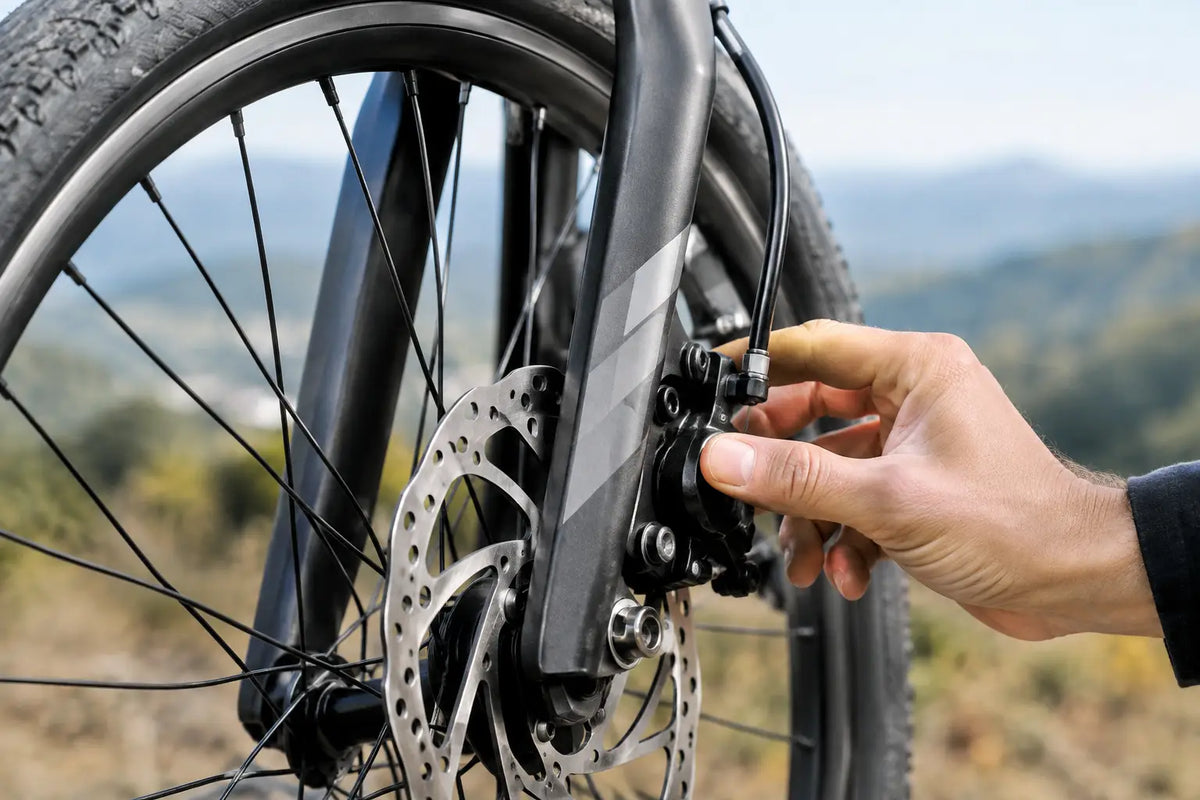
Every time you brake, your bike converts speed into heat. Disc brakes direct that heat into the rotor and pads. Rim brakes direct it into the wheel rim and brake blocks. A short, firm stop creates heat quickly but gives the system a chance to shed it afterwards. Dragging the brakes for minutes down a hill does not.
The more weight and speed involved, the more heat the brakes must manage. A rider carrying panniers, a child seat or shopping asks more of the system than an unladen bike. An electric bike can add motor, battery and conversion-kit weight, while also making it easier to reach higher speeds between corners. None of this makes an e-bike unsafe, but it does make correct brake specification and maintenance more important.
Brake design also affects heat capacity. Larger disc rotors offer more leverage and more surface area to release heat. Four-piston callipers can provide stronger, more controlled braking than basic two-piston units, especially on heavier bikes. They are not automatically necessary for every rider, but they can be a sensible upgrade for hilly commuting, cargo loads and higher-powered e-bikes.
Pad material changes the trade-off
Organic or resin pads often feel quiet and provide strong initial bite. They suit everyday riding well, but can wear faster and lose performance under sustained high temperatures. Sintered or metallic pads generally tolerate heat and wet weather better, making them popular for year-round commuters and long descents. The trade-off is that they can be noisier and may wear rotors faster.
There is no single best pad compound for every bike. The right choice depends on your riding, brake model, local terrain and whether you value low noise, maximum longevity or repeated hard-stop performance.
Brake fluid can be part of the problem
Hydraulic brakes rely on fluid to transfer force from the lever to the calliper. If fluid has absorbed moisture over time, its boiling point can fall. Under severe heat, moisture in the system can form vapour, causing a soft or spongy lever and much less reliable braking.
A proper bleed replaces old fluid and removes air from the system. It is not a cure for worn pads or an undersized rotor, but it is essential maintenance when lever feel has deteriorated or the manufacturer’s service interval is overdue. Different brake systems use different fluids, so use the exact fluid specified by the brake manufacturer.
Common problems that masquerade as fade
Not every braking issue is heat fade. In workshop terms, these faults often arrive with the same rider description: “My brakes just don’t feel right.”
Contamination is one of the most common causes. Chain lubricant, spray polish, cleaning products and hydraulic fluid can contaminate pads and rotors. A contaminated disc brake may squeal, feel slippery or lose power suddenly, even when cold. Cleaning the rotor correctly may help, but badly contaminated pads normally need replacement.
Worn pads are another simple explanation. As pad material becomes thin, it cannot manage heat as effectively and may leave the backing plate dangerously close to the rotor. On rim brakes, worn blocks can expose their holders and damage the rim. Check pads regularly, particularly after wet winter riding where grit accelerates wear.
Cable-operated brakes need their own attention. Frayed or corroded inner cables, sticky outer housings and poor calliper adjustment can make the lever feel heavy while reducing the force that reaches the brake. Mechanical disc brakes can work extremely well, but they need the pads set close enough to the rotor and the cable system kept clean and free-moving.
Rim wear is often missed. Abrasive road grit can gradually wear the braking surface of an aluminium rim until it is too thin to use safely. If the rim has a wear indicator, inspect it. A visibly concave braking track, cracks near the spoke holes or a pulsing sensation through the lever should be checked promptly.
How to brake with more control on hills
Good technique protects your brakes as well as improving control. On a long descent, avoid lightly dragging both brakes all the way down. Instead, look ahead, control your speed before the steepest section or corner, and apply firm braking in shorter intervals where it is safe to do so. This gives the system brief opportunities to cool.
Use both brakes, with slightly more emphasis on the front brake as traction allows. The front brake supplies most of your stopping power because weight shifts forward under braking. That does not mean grabbing it abruptly. Keep your weight balanced, lower your heels, keep your arms relaxed and increase pressure progressively.
In wet weather, give yourself more distance and expect reduced grip. Water on a disc rotor is usually cleared after a few light applications, while rim brakes can take longer to wipe water from the wheel surface. Mud, oil, leaves and painted road markings all reduce tyre grip long before the brakes reach their limit.
For e-bike riders, use lower assist modes on steep or technical descents where appropriate and avoid carrying unnecessary speed into corners. More motor assistance is useful on the climb; on the way down, smooth braking and sensible pace matter far more.
When your bike needs a brake check
Stop riding and arrange an inspection if the lever reaches the handlebar, braking power drops sharply, you smell burning, see smoke, hear metal-on-metal scraping or notice a damaged rotor or rim. Do not try to solve severe fade by simply tightening a cable or adjusting a lever reach.
For less urgent concerns, a brake service can identify pad wear, rotor thickness, fluid condition, cable friction, calliper alignment and wheel-rim condition before they become a roadside problem. The Bike Shack can assess the whole system, then recommend practical work or upgrades based on how and where you ride rather than selling parts you do not need.
A reliable brake setup is not about chasing the biggest rotor or the most expensive calliper. It is about having clean, correctly fitted components with enough capacity for your bike, your load and your routes. Give your brakes the same attention you give your tyres before the next hill, and every stop will feel more controlled.