
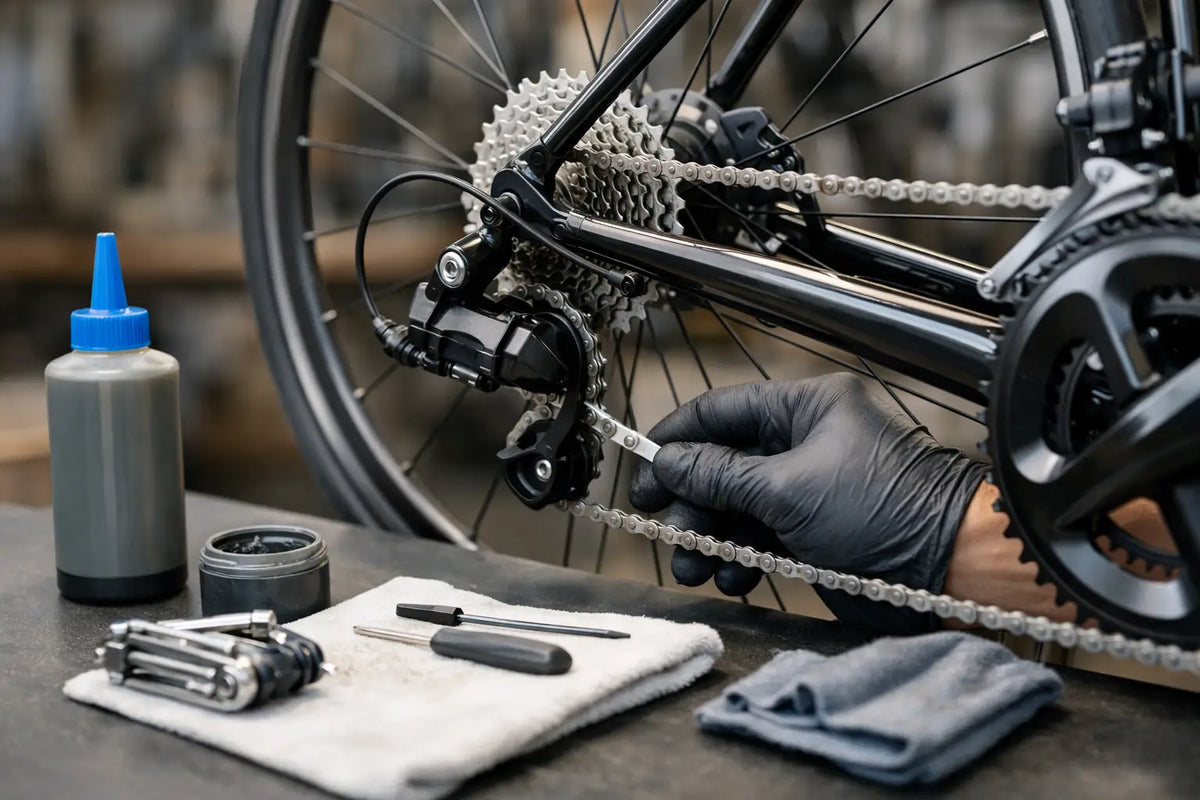
A chain that skips when you push hard up a hill, a gritty pedal stroke on the commute, or a gear that will not settle cleanly is rarely a mystery. It is usually your bike asking for attention. This bicycle drivetrain maintenance guide covers the checks that protect smoother shifting, reduce wear and keep every ride dependable.
Your drivetrain works harder than almost any other part of the bike. It transfers every pedal stroke through the chain, cassette, chainrings and derailleur. Add rain, road grit, winter salt or the extra torque of an e-bike, and those parts can wear quickly if cleaning and adjustment are left too long.
What counts as your drivetrain?
The drivetrain is the group of parts that turns pedal power into forward movement. On most bikes, that means the chain, front chainrings, rear cassette, crankset, rear derailleur, gear cables and jockey wheels. On internally geared hubs, the chain or belt and hub mechanism do the work differently, but regular inspection still matters.
A clean drivetrain is not just about a quiet bike. Dirt acts like grinding paste, accelerating wear on expensive parts. A stretched chain can damage a cassette and chainrings. A poorly adjusted derailleur can throw the chain into the spokes or off the smallest cog, creating a repair that is far more inconvenient than a routine tune-up.
Start with the right maintenance routine
How often you service a drivetrain depends on where and how you ride. A fair-weather leisure rider may only need a proper clean every few weeks. A daily commuter riding through wet roads, or an e-bike rider using strong mid-drive assistance, should inspect and wipe down the chain much more often.
A useful rule is simple: clean and lubricate when the chain looks visibly dirty, feels dry or starts sounding noisy. Do not wait for the gears to complain. After a wet ride, wipe the chain as soon as practical and reapply lubricant once it has dried. If the bike has been through salted winter roads, rinse off the residue carefully before it can corrode metal parts.
Keep cleaning products controlled
Use a bike-specific degreaser or a suitable drivetrain cleaner, a stiff brush, clean rags and the correct chain lubricant for the conditions. Wet lube lasts longer in rain but attracts more grime. Dry lube runs cleaner in dry weather but needs more frequent application. There is no single best choice - match the lube to your regular riding conditions.
Avoid blasting bearings, bottom brackets, hub seals or electric-bike motor areas with a pressure washer. High-pressure water can force contamination past seals. For e-bikes, keep cleaning products away from electrical connectors, displays and battery terminals, and remove the battery before a thorough clean where the manufacturer advises it.
How to clean and lubricate the chain
Shift onto a middle rear cog and, where fitted, the smaller front chainring. This gives you good access and reduces chain tension. Apply degreaser to the chain and cassette, then work it in with a brush or chain-cleaning tool. Rotate the cranks backwards by hand only. Never place fingers near the chain while turning pedals under power.
Wipe away the loosened dirt with a rag. Clean the jockey wheels on the rear derailleur too, as these small wheels collect a surprising amount of compacted debris. Finish by wiping the chain until it looks clean on the outside. The goal is lubricant inside the rollers, not a wet coating that collects road grit.
Apply one small drop of lubricant to each chain roller while rotating the cranks backwards. Let it settle for a few minutes, then wipe the outside of the chain thoroughly. A chain that looks almost dry externally is usually lubricated correctly. Excess oil is not extra protection - it is dirt waiting to happen.
Check for wear before it costs you more
A chain gradually elongates as its pins and rollers wear. Riders often call this chain stretch, although the metal links are not literally stretching. Once wear reaches the replacement point, the chain no longer meshes properly with the cassette teeth. Keep riding it and a simple chain replacement can become a chain, cassette and chainring job.
A chain wear gauge is the quickest way to check. Many modern multi-speed chains should be replaced around the 0.5% wear mark, particularly on 11- and 12-speed systems. Some 8-, 9- and 10-speed chains may have a slightly higher recommended limit. Check the guidance for your specific drivetrain rather than relying on one universal figure.
Look closely at the cassette and chainrings as well. Teeth that have become narrow, hooked or shark-fin shaped can indicate wear. A new chain that skips on a particular sprocket may mean the cassette is already worn. This is one of those cases where replacing only the cheapest part does not always solve the problem.
Pay extra attention to e-bike drivetrains
Mid-drive conversion systems and factory mid-drive e-bikes put motor torque through the chain and gears. That is excellent for hill climbing and loaded commuting, but it makes clean shifting and timely chain replacement even more valuable.
Ease off pedal pressure briefly when changing gear. A shift under full motor and rider load puts a sharp force through the chain and cassette. Using the correct gear before a steep climb will feel smoother and can extend drivetrain life. If your bike has a gear sensor or shift-detection feature, make sure it is set up and working as intended.
Diagnose noisy or poor shifting
Not every shifting issue means worn components. Cables can stretch slightly after installation, housings can become contaminated, and a bike knocked in a rack can bend the derailleur hanger. Start with the simple checks before reaching for adjustment screws.
If the chain hesitates to move to a larger rear sprocket, cable tension may be too low. Turn the barrel adjuster a small amount anticlockwise, then test one shift at a time. If it hesitates moving to a smaller sprocket, cable tension may be too high, so turn the adjuster clockwise in equally small steps.
Limit screws are different. They set the safe inward and outward travel of the derailleur. Do not use them as a general cure for poor indexing. An incorrectly set limit can allow the chain to fall off the cassette or into the spokes. If you are unsure which screw does what, stop before making large adjustments and book a drivetrain tune.
A bent derailleur hanger can look like an adjustment problem because the gears may shift reasonably in some sprockets but poorly in others. It needs accurate alignment with the right workshop tool. Trying to bend it by eye can lead to broken parts or a derailleur entering the wheel.
Make shifting easier on every ride
Good riding habits reduce workshop bills. Shift before you need the gear, especially before a climb or traffic stop. Keep pedalling lightly while shifting, but do not force the pedals. Avoid severe chain angles where possible, such as the smallest chainring with the smallest rear sprocket or the largest chainring with the largest sprocket.
If your bike has a front derailleur, trim it where necessary to prevent chain rub. On single-chainring setups, use the full cassette range sensibly but listen for excessive noise at the extremes. A modern drivetrain can handle plenty, but smoother chain lines are quieter and kinder to components.
When a home clean is not enough
Routine cleaning is ideal for home maintenance, but certain symptoms need a professional inspection: persistent skipping after a new chain, gears that change on their own, a visibly bent hanger, damaged teeth, stiff chain links, or a grinding bottom bracket. A crash, a chain jam or a derailleur near the spokes also deserves prompt attention.
At The Bike Shack, a drivetrain service can identify whether you need a clean adjustment, a fresh cable, a replacement chain or a matched set of components. That matters because fitting the right parts together is the difference between a bike that merely rolls and one that shifts cleanly under real riding load.
Give your drivetrain ten minutes after your next dirty ride. Wipe the chain, listen to the gears and check how the bike changes under light pedal pressure. Small, regular care keeps your ride quieter, your components working longer and your next journey ready when you are.