A sharp squeal at the lights can make even a well-loved bike feel like it needs urgent attention. Brake squeal causes are not always serious, but the noise is your bike telling you that something has changed at the braking surface. The key is working out whether it is a simple bedding-in issue, a cleaning job, or a sign that your stopping power needs professional attention.
On a commuter, cargo bike or converted e-bike, reliable brakes are not optional. Extra speed, weight and wet-road riding all put more demand on pads, rotors and rims. Here is what creates that high-pitched noise and how to deal with it without compromising safe stopping.
Why bicycle brakes squeal
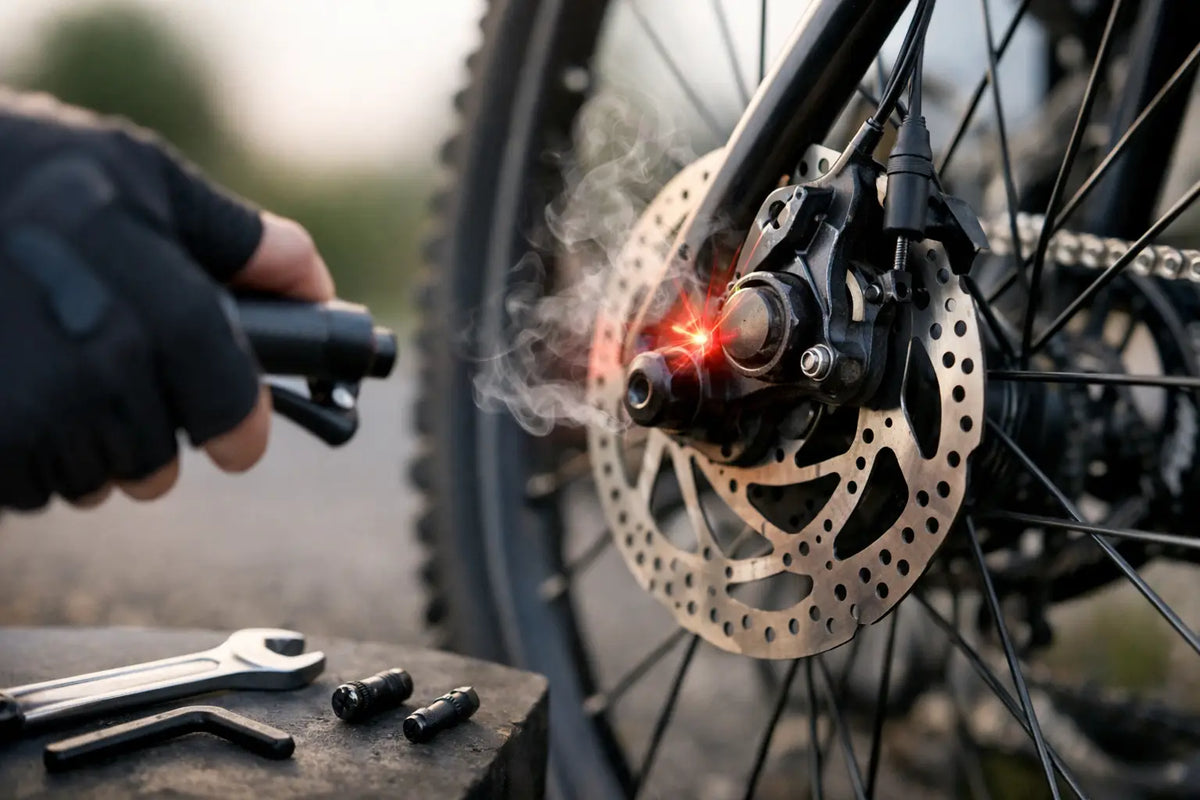
Brake squeal is vibration. When a pad contacts a disc rotor or rim, tiny vibrations can build into a frequency you can hear. The sound can be brief and harmless, especially after rain, but it can also point to contamination, poor alignment, worn parts or a braking system that has not been set up correctly.
Disc brakes tend to squeal more dramatically because the rotor and pads work in a compact, exposed area. Rim brakes can squeal too, usually when the pads hit the rim at the wrong angle or when dirt has embedded itself in the pad. In either case, simply spraying lubricant around the brake is never the answer. Oils and lubricants can ruin pads and seriously reduce braking performance.
Moisture, grit and road film
A wet rotor or rim commonly squeals for the first one or two brake applications. Rain, puddle spray and winter road film sit between the pad and braking surface until heat and friction clear them away. If the noise disappears quickly and braking remains firm, this is generally normal.
Persistent noise after the bike has dried is different. Grit can score a rim or rotor, while fine dust can glaze the pad surface. Regular cleaning matters, particularly for bikes used through winter, on towpaths or in busy city traffic. Use a clean, lint-free cloth and a brake-safe cleaner designed for the job. Keep chain lubricant, polish and aerosol overspray well away from the braking surfaces.
Contaminated pads or rotors
Contamination is one of the most common brake squeal causes, and it is often accompanied by a weaker or inconsistent brake feel. A small amount of chain lube flicked from the drivetrain, hydraulic fluid from a leak, or residue from an unsuitable cleaner can soak into brake-pad material. Once that happens, the pads may squeal loudly, feel grabby or require far more lever force than usual.
A rotor can often be cleaned thoroughly, but contaminated pads are less predictable. Light surface contamination may sometimes be removed by cleaning and carefully sanding the pad face. If oil has soaked in, replacement is usually the safer and more dependable option. Replacing pads is cheaper than discovering reduced stopping power on a wet descent.
For rim brakes, inspect the pads for shiny patches, tiny metal fragments and embedded grit. A small shard of aluminium from the rim can make a sharp scraping or squealing sound and will wear the rim faster if left in place.
Brake squeal causes linked to wear and setup
Noise is not always about dirt. Brakes rely on accurate positioning, and a few millimetres can make a meaningful difference to feel, noise and pad life.
Worn or glazed brake pads
As pads wear, their friction material gets thinner and heat is transferred less effectively. Disc brake pads can become glazed after repeated hard braking, such as a long descent with the brake dragged continuously. The face becomes smooth and shiny rather than slightly matt, making it more likely to squeal.
If there is plenty of pad material left, a light sand on a flat surface may restore the texture. This is only worthwhile when the pads are otherwise clean and in good condition. Pads that are close to their backing plate, unevenly worn or contaminated should be replaced. Never wait for a grinding sound. That can mean metal is contacting the rotor or rim, turning a straightforward service into a more expensive repair.
Misaligned calipers and rubbing rotors
A disc rotor should run freely through the caliper when the lever is released. If it rubs, it can heat up, distort slightly and create intermittent squealing. Rotor rub may come from a caliper that has shifted, a wheel that is not fully seated in the dropouts, loose hub bearings, or a rotor that has been bent in a bike rack or during transport.
A gentle, occasional tick does not always demand a new rotor. But a wheel that resists spinning freely, a rotor that visibly wobbles, or a brake that suddenly loses its usual bite needs inspection. Caliper alignment is a precise job, particularly with hydraulic systems, and it should be checked alongside rotor condition and pad wear.
Rim brake toe-in and rim condition
On rim brakes, the front edge of each pad should normally contact the rim a fraction before the rear edge. This is called toe-in. It reduces the tendency for the pad to grab and vibrate. Pads fitted flat against the rim can squeal intensely, even when both the pads and rim are clean.
The pads also need to contact the rim's braking track, not the tyre and not below the rim edge. A worn rim, a damaged braking surface or a wheel that is out of true can create noise and pulsing at the lever. Wheel truing and brake adjustment often belong in the same workshop check because each affects the other.
E-bike braking: more load, more heat
An e-bike asks more of its brakes than a lightweight road bike rolling around the park. Motor assistance can bring higher average speeds, while batteries, racks, panniers and child seats increase total weight. On a converted bike, the original brakes may need an honest assessment before the motor is fitted or after the first few weeks of riding.
Squeal on an e-bike can result from ordinary contamination, but heat management deserves closer attention. Long hills, stop-start commuting and carrying loads can overheat undersized or worn pads. Suitable rotor size, quality pads and correctly bedded-in components help the system stay quieter and more consistent. The right choice depends on the bike, rider weight, terrain and intended use, not just the most expensive part on the shelf.
Avoid riding the brakes down a hill where possible. Use controlled, firmer braking in intervals to manage speed, allowing brief moments for the system to cool. This does not eliminate heat on a long descent, but it is better than dragging the lever continuously.
When you can clean it and when to book it in
A quick clean and inspection can make sense when the squeal began after rain, the brake still bites confidently, and there is no visible damage. Check that the wheel is secure, look for grit in the pads, and clean the rotor or rim with the correct product. If the brake has recently had new pads or a new rotor, allow time for proper bedding-in: several controlled stops from moderate speed help transfer an even layer of pad material onto the braking surface.
Stop riding and arrange a brake inspection if you notice any of the following:
- A spongy lever, a lever that pulls to the handlebar, or braking that feels much weaker than normal.
- Grinding, metal-on-metal noise, deep rotor scoring or a rim with visible damage.
- A hydraulic fluid leak, oily residue around the caliper, or pads exposed to lubricant.
- Strong pulling to one side, severe rotor rub, or a wheel that is loose or badly out of true.
- Persistent squeal after cleaning and bedding in, particularly if it appears with reduced stopping power.
Keep your brakes quiet without chasing silence
A completely silent brake is nice, but quiet is not the only measure of a healthy system. Some pad compounds are noisier in wet weather or under heavy load, while offering excellent control and durability. The priority is predictable, powerful braking every time you pull the lever.
Clean the bike carefully, keep drivetrain products away from braking surfaces, and check pad thickness before it becomes a problem. If the sound has changed or your confidence in the brake has changed with it, let a skilled workshop inspect it. A properly set-up brake gives you more than a quieter ride - it gives you the confidence to power your journey safely.