
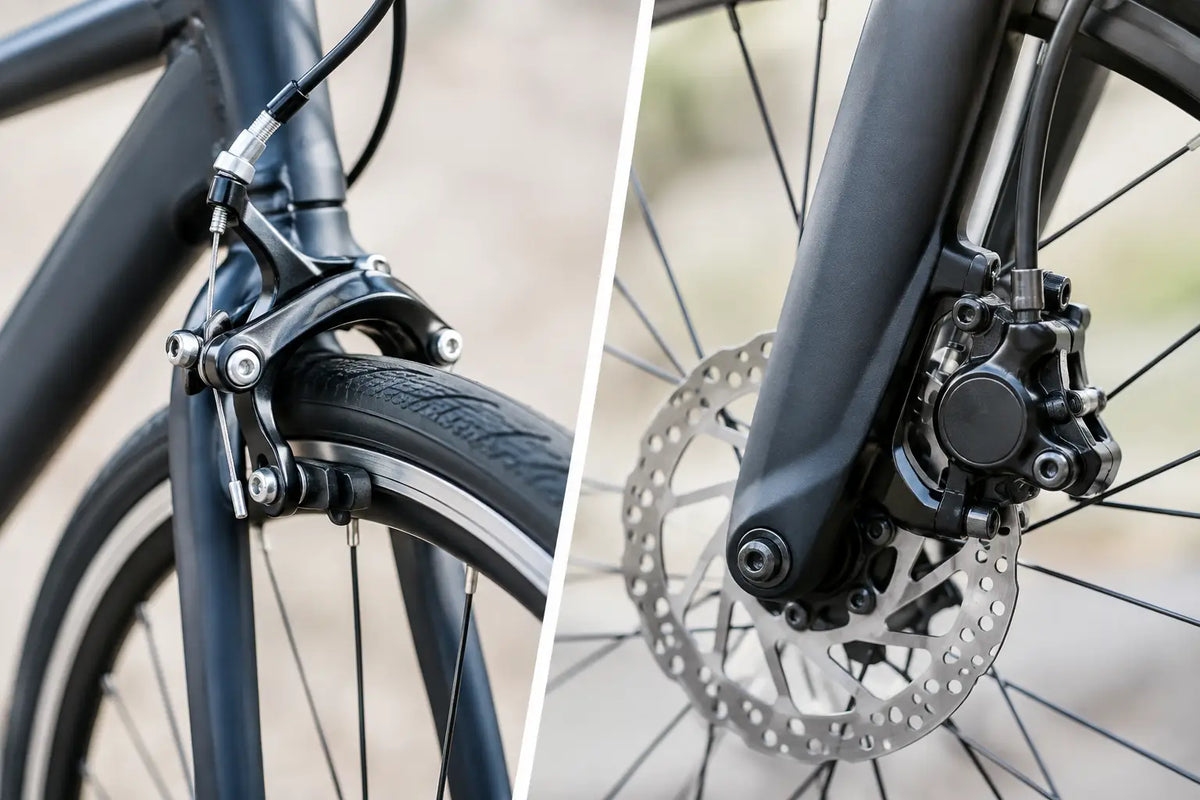
A brake upgrade is rarely about chasing a specification sheet. It is about stopping with confidence when rain hits the commute, a child moves unexpectedly near the path, or an e-bike adds speed and weight to your usual route. In the mechanical vs hydraulic brakes decision, the right answer depends on your bike, riding conditions, budget and how you want maintenance handled.
Both systems can stop a bike safely when they are correctly fitted and maintained. The difference is in how they transfer force from lever to caliper, how much adjustment they need and how consistently they perform under pressure. For some riders, a well-set-up cable brake is the sensible, dependable choice. For others, hydraulic braking is the upgrade that makes every ride feel more controlled.
Mechanical vs Hydraulic Brakes: The Core Difference
Mechanical disc brakes use a steel cable running from the brake lever to the caliper. Pull the lever, the cable moves, and the caliper pushes the pad against the rotor. The principle is familiar, straightforward and easy to inspect. Many bikes with rim brakes also use cables, so the feel and basic maintenance will not be completely new.
Hydraulic disc brakes replace that cable with a sealed hose filled with mineral oil or DOT brake fluid, depending on the system. Lever pressure moves fluid through the hose and actuates pistons in the caliper. This creates a more direct, even application of force at the rotor.
That engineering difference matters most at the lever. Mechanical brakes usually require a firmer pull and can feel less smooth as cables age or collect dirt. Hydraulic brakes typically deliver more power with less hand effort, along with better modulation - the ability to finely control how hard the brake bites rather than switching abruptly from rolling to stopping.
Stopping Power and Control on Real Rides
Hydraulic brakes generally offer stronger braking performance, especially with larger rotors and quality pads. They are particularly useful on loaded bikes, long descents, rough trails and e-bikes, where speed and total bike weight raise the demands on the braking system.
More power is not only about emergency stops. It also means less hand fatigue. On a long downhill section, riders using mechanical brakes may need to squeeze harder and more often, which can tire hands and forearms. A hydraulic system gives a lighter lever action and steadier control when you are feathering the brakes into a corner or managing wet, slippery ground.
Mechanical brakes still have a place. For flatter city riding, casual weekend use and bikes where simplicity is the priority, they can provide reliable braking without the higher cost of a hydraulic conversion. A good mechanical caliper, correctly matched levers, fresh cable and housing, clean rotors and decent pads can perform far better than a neglected hydraulic setup.
The quality of the entire system counts. Rotor size, pad compound, tyre grip, rider technique and bike load all affect stopping distance. Fitting powerful brakes does not cancel the need to look ahead, brake progressively and leave space in poor weather.
Why hydraulic brakes feel more precise
Most hydraulic calipers use opposing pistons that press both pads towards the rotor. This helps apply pressure more evenly and reduces the rotor flex sometimes found in single-piston mechanical calipers. The result is often a cleaner bite point and more predictable braking.
Hydraulic systems also self-adjust as pads wear. As the pad material becomes thinner, the pistons move further out to maintain a consistent lever feel. You still need to inspect and replace worn pads, but you are not constantly adjusting cable tension to compensate for normal wear.
Maintenance: Simple Cable Work or Specialist Fluid Service?
Mechanical brakes are easier to service at home or on the road. Cables can stretch, corrode or become contaminated, but replacement is affordable and the issue is usually visible. If your lever feels heavy, the brake is slow to release or the bite point has moved, a cable and housing service may solve it.
The trade-off is that mechanical brakes need more routine adjustment. Pad wear changes the caliper position and cable tension, so the lever can gradually pull closer to the handlebar. Cable friction can also develop slowly enough that riders do not notice how poor the brake feel has become until a wet ride exposes it.
Hydraulic brakes have a sealed system, so there is no cable friction and less regular adjustment. They do, however, require a proper bleed when air enters the system or the fluid ages. A spongy lever, inconsistent bite point, visible fluid leak or a lever pulling all the way to the bar are signs to stop guessing and have the brakes checked.
Bleeding is not impossible for a confident home mechanic, but it is precise work. Fluid type matters, seals can be damaged by incorrect products, and any brake fluid on pads or rotors can seriously reduce braking performance. For riders who value fast, dependable results, workshop servicing is often the better option.
Pad and rotor care applies to both
Whatever system you choose, pads and rotors are wear items. Inspect pad thickness regularly, particularly after wet or gritty rides. Worn pads can score a rotor, create noise and reduce stopping power. Keep rotors free of chain lube, spray polish and cleaning chemicals, and never touch the braking surface with oily fingers.
Squealing does not always mean the brakes are unsafe, but it is worth investigating. Contaminated pads, glazed surfaces, loose caliper bolts, an untrue rotor or poor alignment can all cause noise. Brakes should engage smoothly and quietly enough that you trust them, not make you wonder whether they will work at the next junction.
Cost and Upgrade Compatibility
Mechanical disc brakes are usually cheaper to buy, fit and maintain. That makes them a strong option for keeping an older commuter, family bike or utility bike on the road without overspending. Cable components are widely available, and routine servicing tends to be quick.
Moving from mechanical to hydraulic brakes is not always a simple caliper swap. Hydraulic brakes need compatible disc mounts, correct rotor sizes and suitable mounting adaptors. You will also need hydraulic brake levers, hoses and calipers as a matched system. If your bike has integrated gear-and-brake levers, the project may involve changing the controls or choosing carefully compatible parts.
For e-bike conversions, brake planning deserves extra attention. A mid-drive conversion can transform a familiar bike into a quicker, heavier machine, especially when carrying luggage or riding hills. Hydraulic brakes are often worthwhile here, but compatibility with motor cut-off sensors, frame routing and existing levers must be checked before ordering parts. The Bike Shack can assess the complete setup rather than treating the brakes as an isolated upgrade.
Do not assume the most expensive option is automatically right. Spending on fresh tyres, correctly sized rotors and a full brake service may deliver a bigger safety improvement than fitting entry-level hydraulic brakes to a poorly maintained bike.
Which Brake System Suits Your Riding?
Choose mechanical brakes if you want affordable, easy-to-understand maintenance, ride mainly on flatter routes and are happy to make occasional cable and pad adjustments. They are also useful for riders travelling far from specialist workshops, where standard cables and basic tools are easier to find.
Choose hydraulic brakes if you want lighter lever effort, stronger braking, better control in the wet or on descents, and less frequent adjustment. They make particular sense for regular commuters riding year-round, trail riders, cargo setups and e-bikes that demand more from every stop.
There is a middle ground, too. Cable-actuated hydraulic calipers use a standard cable lever but introduce hydraulic action at the caliper. They can improve feel without replacing the whole control system, although they do not always match the performance of a full hydraulic setup. They are worth considering when compatibility limits a complete conversion.
Get the Most From the Brakes You Have
Before upgrading, make sure your current brakes are properly aligned, bedded in and maintained. A workshop check can identify dragging pads, worn rotors, frayed cables, contaminated surfaces and poor lever setup. Small corrections can restore confidence quickly, while a clear assessment helps you spend on the upgrade that will genuinely improve your ride.
Your brakes should suit the journeys you actually make, not just the bike you wish you owned. Whether that means fresh cables for a dependable commuter or hydraulic stopping power for an electrified hill machine, the best choice is the one that lets you ride further with calm, controlled confidence.