
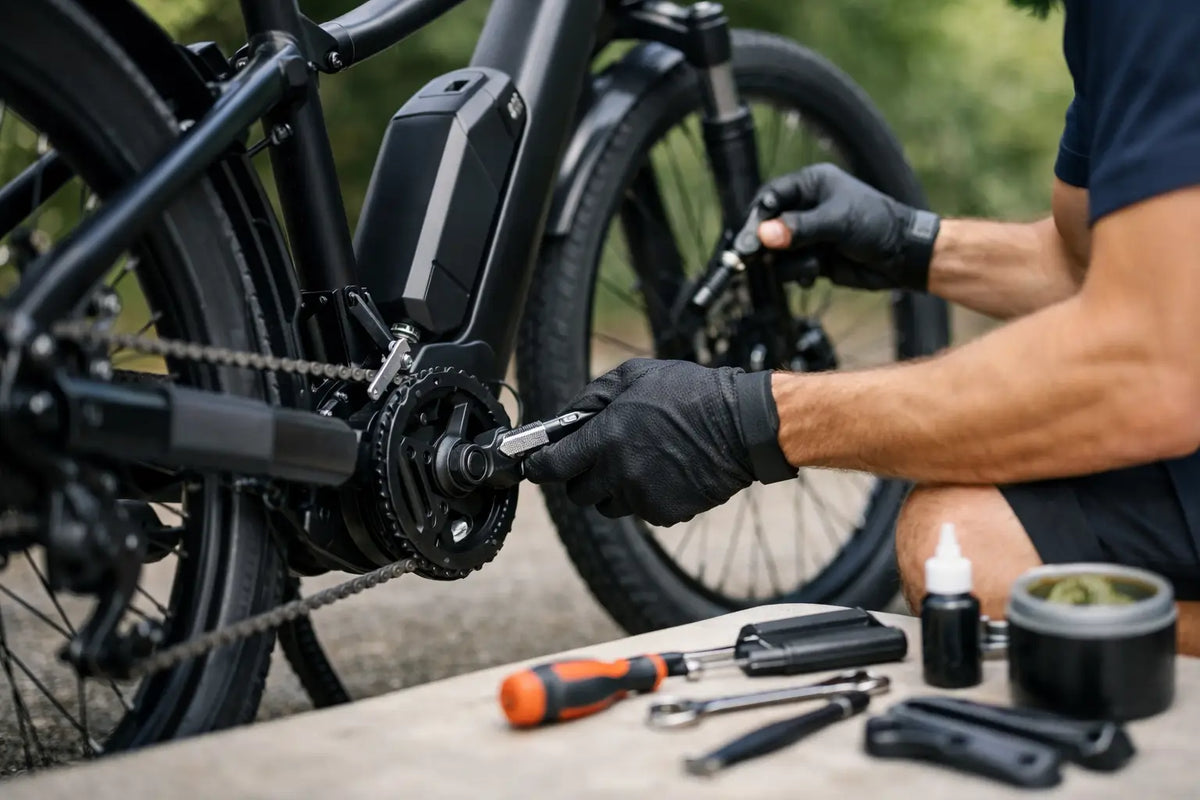
A neglected e-bike rarely fails all at once. It starts with a noisy chain, a brake that needs a harder pull, a tyre losing pressure, or a battery that does not seem to go quite as far. Knowing how to maintain an e-bike means catching those small changes before they affect your commute, your range or your safety.
Electric assistance adds torque, speed and extra weight to the usual demands of cycling. That is great for hills, headwinds and carrying kit, but it also means chains, brake pads, tyres and wheels can wear faster than on a non-electric bike. A few regular checks keep the ride smooth and help protect the investment in your motor system and battery.
How to maintain an e-bike between services
The best routine is one you will actually follow. Give the bike a quick once-over before rides, clean and inspect it properly every few weeks, and arrange a workshop service when wear starts to show. Daily commuting in wet weather will need more attention than dry weekend riding, while a powerful mid-drive used on steep hills deserves particularly close drivetrain care.
Before setting off, squeeze both brake levers, check that the tyres feel firm, and look over the bike for loose bags, lights or cables. Lift the rear wheel and turn the pedals briefly. The chain should move quietly and shift cleanly through the gears. If something sounds, feels or looks different, do not assume it will sort itself out on the road.
After a wet or gritty ride, wipe down the frame, chain and lower motor area with a soft cloth. Road spray carries abrasive dirt into moving parts, and leaving it in place accelerates wear. You do not need to make the bike showroom-clean after every journey, but clearing away grit takes only a few minutes and saves money later.
Clean carefully around electrical parts
Most quality e-bike components are designed to handle rain, puddles and normal road use. They are not designed for a high-pressure jet wash. Pressure can force water past seals into hubs, bearings, display units, connectors and the motor casing.
Use a bucket of warm water, bike-safe cleaner, a sponge and soft brushes instead. Remove the battery first if your system allows it, then ensure the battery mount and terminals stay dry. Clean the drivetrain with a suitable degreaser applied to a cloth or brush, rather than spraying product directly towards the motor. Once clean, dry the bike thoroughly before refitting the battery.
Avoid soaking the display, charging port and cable connections. If you spot damaged insulation, loose plugs or corrosion on terminals, stop using the electrical system until it has been checked. A temporary loss of assistance can be inconvenient; a compromised cable or connector can become a bigger reliability issue.
Look after the battery for dependable range
Your battery is one of the most valuable parts of the bike, and its care has a direct effect on range and lifespan. Use the charger supplied or approved for your specific battery. A charger may physically fit another connection but still be unsuitable for its voltage, battery management system or charging profile.
For everyday riding, it is sensible to avoid leaving a lithium-ion battery fully depleted for long periods. Charge it after use when practical, and do not leave it on charge unattended overnight or for days at a time. Once the charger indicates a full charge, disconnect it.
Temperature matters more than many riders realise. Bring the battery indoors in very cold or hot weather, particularly if the bike is stored in a shed, garage or vehicle. Charge at room temperature where possible. A cold battery can deliver less range, while charging a battery that is extremely cold or overheated is not ideal. Let it return to a moderate temperature first.
If you are not riding for several weeks, store the battery somewhere dry and secure, away from direct heat and flammable materials. A partial charge is generally better for long-term storage than leaving it completely empty or permanently at 100 per cent. Check the manufacturer guidance for your specific system, as storage recommendations can vary.
Keep an eye on changes rather than expecting a fixed mileage from every charge. Range depends on rider weight, hills, wind, tyre pressure, assist level, cargo, temperature and how much you pedal. A gradual reduction can be normal over time. A sudden drop, charging error, swollen casing, unusual heat or damaged housing needs professional attention straight away.
Give brakes, tyres and wheels priority
E-bikes ask more of braking systems because they carry more mass and can reach speed quickly. Brake pads may wear sooner, especially on a loaded commuter bike or one used on long descents. Check pad thickness regularly and listen for scraping, squealing or a metallic sound. These can point to contamination, misalignment or pads worn down to their backing material.
Hydraulic brake levers should feel firm and consistent. If a lever pulls close to the handlebar, feels spongy or loses power, the system may need adjustment, a bleed or replacement pads. Mechanical disc brakes also need periodic cable adjustment. Brakes are not the place to wait and see.
Check tyre pressure at least weekly, and more often if you commute daily. Under-inflated tyres increase rolling resistance, reduce range and make punctures more likely. The pressure printed on the tyre sidewall is a range, not always a target. Your ideal setting depends on tyre width, rider weight, road surface and load. Heavier riders and cargo usually need more pressure, while slightly less pressure can improve comfort and grip on rough roads.
Inspect tread and sidewalls for cuts, embedded glass, bulges and exposed casing. Replace damaged tyres rather than risking a blow-out at speed. While you are there, spin each wheel and watch for side-to-side wobbles, rubbing brakes or loose spokes. E-bike wheel loads can expose a weak spoke or loose rim sooner than a lighter bike. A small wheel wobble is often quick to correct when caught early.
Protect the chain, cassette and gears
A mid-drive e-bike sends motor power through the same chain, cassette and chainring that you pedal through. That makes clean lubrication and sensible shifting essential. A rear-hub motor puts less load through the chain, but the drivetrain still needs regular care.
Wipe the chain clean and apply a small amount of suitable chain lubricant to the rollers, turning the cranks backwards as you go. Let it settle, then wipe off excess. Too much lube attracts grime and creates the black paste that wears components faster. Wet lube suits persistently wet conditions; dry lube stays cleaner in dry weather but needs more frequent application. Choose for the conditions you actually ride in.
Shift down before a steep climb and ease pedal pressure briefly during gear changes. This is especially valuable on a mid-drive system. Changing gear under full motor torque can strain the chain and derailleur, and it is a common cause of snapped chains or worn teeth. Use the lower gears and a higher assistance level when you need climbing support rather than grinding a high gear.
If gears jump, hesitate or chatter, the cause may be simple cable tension, but it can also be a worn chain, bent derailleur hanger or tired cassette. Continuing to ride through poor shifting often turns one replacement part into several. A workshop can measure chain wear accurately and tune the system before it damages the more expensive cassette and chainring.
Check the motor, controls and fittings
Electric systems need observation more than home repair. Start the bike and confirm that the display, lights and assist levels work as expected. Look for error codes and make a note of exactly when they appear. Check that the speed sensor and its magnet, where fitted, are clean and correctly aligned.
Periodically inspect bolts on the stem, handlebars, pedals, rack, mudguards and motor mounting area. Do not guess torque settings on critical components, particularly carbon parts, handlebars or motor mounts. A torque wrench and the manufacturer specification are the right tools. If you do not have both, book the check rather than overtightening a bolt.
Software updates can improve behaviour or resolve known issues on some systems, but they should be applied using approved methods. Do not modify speed limits, bypass safety functions or fit unapproved electrical parts. Aside from reliability and warranty concerns, a modified e-bike may no longer meet legal requirements for road use.
Know when to book professional e-bike maintenance
Home checks handle cleaning, lubrication and early fault spotting. Professional servicing is the right call for brake bleeding, wheel truing, motor diagnosis, internal hub work, electrical faults and recurring error codes. It is also worthwhile before winter, after a hard season of commuting, or before a long touring trip.
Book sooner if you notice battery damage, intermittent power, a burning smell, water inside a display, cracked rims, loose spokes, brake fade or a drivetrain that skips under load. Those are not minor annoyances to ride around.
At The Bike Shack, an e-bike service can combine the mechanical essentials with a proper check of the conversion system, controls and connections. That means clearer shifting, stronger stopping and the confidence that your assisted miles are backed by practical workshop attention.
Your e-bike should make more journeys possible, not add uncertainty to them. Keep the battery stored well, the tyres properly inflated, the brakes responsive and the drivetrain clean, then let a trained workshop handle the jobs that demand specialist tools. That small routine keeps every ride ready for the road ahead.