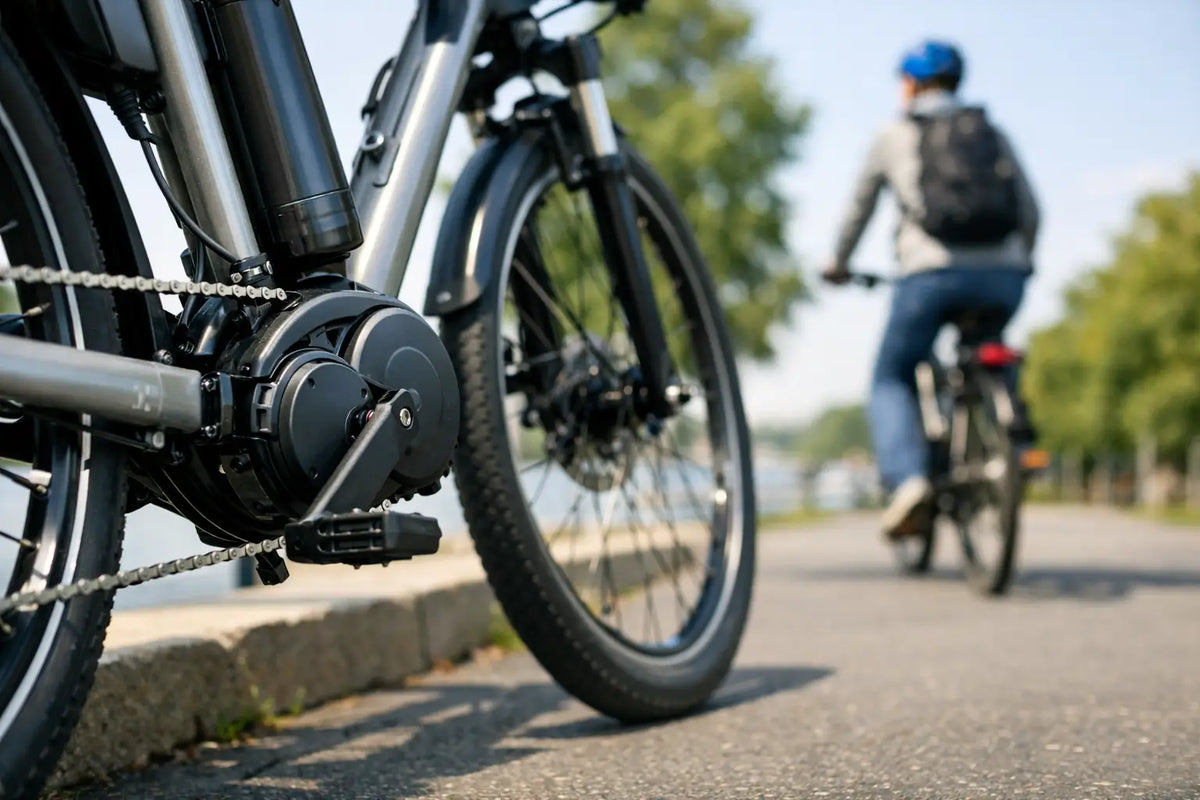
A conversion should make your familiar bike easier to ride, not turn it into something awkward, noisy or difficult to maintain. That is why a proper Tongsheng motor review starts with how the system feels through the pedals, rather than just the wattage printed on the box. For riders who want help on climbs, longer commutes and heavier loads while keeping a natural cycling feel, Tongsheng mid-drives deserve serious consideration.
The best-known Tongsheng platform is the TSDZ2 and its updated variants, often sold with different displays, battery options and controller configurations. It is popular because it puts the motor power through your bike's existing drivetrain and uses a torque sensor to respond to how hard you pedal. There are worthwhile benefits here, but also fitting and maintenance considerations that should be understood before you commit.
Tongsheng motor review: the ride feel
The defining feature of a Tongsheng mid-drive is torque sensing. Instead of simply switching assistance on when the cranks are turning, the motor measures pedal pressure and adds power in proportion to your effort. Push gently when rolling away from a junction and assistance is restrained. Put real pressure through the pedals on a hill and the motor responds with more support.
That makes the ride feel closer to having exceptionally strong legs than being pulled along by a motor. For leisure riders, commuters and anyone converting a quality hybrid, touring bike or hardtail, this is a major advantage. You still choose the gear, set the pace and feel connected to the bike. On twisty paths or busy streets, that controllable response can feel more predictable than a basic cadence-sensor system that delivers a fixed burst of power.
It is not magic, though. The response depends on a correctly installed sensor system, a well-set-up drivetrain and sensible gearing. If your chain skips, your cassette is worn or your bottom bracket shell is not compatible with the kit, the riding experience will suffer. A mid-drive amplifies the loads travelling through the chain, chainring and rear gears. The motor cannot compensate for neglected parts.
Power, climbing and range in the real world
Tongsheng motors are available in several nominal power ratings, commonly including 250 W, 500 W and 750 W versions depending on the market and kit supplier. Bigger numbers can be appealing, but the right choice is not always the most powerful motor.
A 250 W torque-sensing setup can be an excellent answer for everyday road riding, canal paths and moderate hills, particularly where legal e-bike requirements limit continuous rated power and assisted speed. It is generally easier on the drivetrain, more discreet and often plenty for a rider who is willing to pedal. A higher-output option offers stronger support for steep gradients, loaded cargo, headwinds or a larger rider, but it also increases heat, component wear and the importance of careful gear selection.
A Tongsheng motor climbs well when it is ridden like a mid-drive. Shift down before the hill bites, keep the cranks turning at a comfortable cadence and let the motor work in an efficient gear. Grinding up a steep incline in a high gear is hard on any conversion system. It puts high torque through the chain and can create unnecessary heat in the motor.
Range is equally dependent on the complete build, not a single claim. Battery capacity, rider weight, tyre pressure, terrain, wind, temperature, chosen assistance level and gearing all matter. A 36 V 10 Ah battery stores around 360 Wh, while a 48 V 14 Ah battery holds around 672 Wh. The latter has substantially more energy, but it also costs more and adds weight.
For a realistic expectation, think in terms of riding style. A rider using low to moderate assistance and contributing through the pedals may cover a useful commuting week between charges. Someone using high assistance into hills, carrying shopping or riding in cold weather will draw down the battery far faster. A reputable battery with a quality battery-management system is every bit as important as the motor itself.
Where Tongsheng makes the most sense
Tongsheng is particularly well suited to riders who value control and want the bike to remain a bike. It can be a strong choice for a commuter who arrives at work less sweaty, a recreational rider who wants to keep up with faster friends, or a couple looking to make longer weekend rides more achievable.
It also suits an existing bike that already fits you properly. If the frame is sound, the wheels are true, the brakes are capable and the drivetrain is in decent condition, conversion can be better value than replacing it with a budget factory e-bike. You retain your preferred saddle, handlebar position and handling characteristics, with assistance added where it counts.
There are situations where another system may be better. A rider who wants instant, low-effort acceleration with minimal pedalling may prefer a cadence-sensor setup. A high-mileage delivery rider may prioritise a heavier-duty drivetrain and a system with broader dealer support. If your bike has an unusual bottom bracket, internal gear hub, carbon frame, complex suspension layout or significant existing wear, compatibility must be checked before ordering parts.
Installation is where a good kit becomes a reliable bike
Tongsheng kits are designed around common bottom-bracket standards, but fitting is not a universal bolt-on job. Bottom-bracket width, shell diameter, cable routing, chainline, frame clearance and mounting points for the battery all need checking. A battery must be mounted securely, clear moving parts and avoid placing undue stress on a lightweight bottle-cage mount.
The electrical side also deserves respect. Cables should be routed away from tyres, chainrings and suspension movement, with connectors properly seated and protected from repeated strain. Displays, brake cut-offs where fitted, speed sensors and lighting connections need testing before the bike is returned to the road. A neat installation is not just cosmetic. It helps prevent intermittent faults that can be frustrating to trace later.
At The Bike Shack, we approach a conversion as a complete workshop job, not simply a motor installation. That means checking braking performance, wheel condition, tyre suitability, chain wear and gear indexing alongside the e-bike system. More power makes weak brakes and tired drivetrains more obvious.
Drivetrain and brake upgrades worth considering
You do not necessarily need to replace every component, but a few checks are sensible before adding a mid-drive. A stretched chain and worn cassette should be replaced together. A narrow chainline or poorly aligned chainring can lead to noisy shifting and accelerated wear. On a bike used for regular hill climbing, tougher chains and a wider-range cassette can be practical upgrades.
Brakes should feel firm, stop the bike confidently and have enough pad material remaining. Hydraulic disc brakes offer strong, consistent braking in poor weather, but well-maintained rim brakes or mechanical discs can also be appropriate depending on the bike and intended use. The key is honest assessment, not fitting parts for the sake of it.
Reliability, servicing and the trade-offs
Tongsheng systems have earned a following because they offer a responsive ride at a competitive price. They are also relatively familiar to the conversion market, so common service items and replacement parts are often easier to source than for an obscure no-name system. That said, they are not maintenance-free.
The torque-sensing design has more to gain from correct calibration and careful installation than a basic cadence-sensor motor. Internal gears, bearings, nylon drive components and electronics will eventually wear, particularly if the bike is regularly ridden at high power in wet, hilly conditions. Regular chain lubrication, sensible shifting, bolt checks and keeping connectors clean go a long way towards protecting the system.
Water resistance should be treated sensibly too. Riding in rain is one thing; pressure-washing the motor area or leaving the bike exposed outdoors for long periods is another. Remove the battery when transporting the bike on a rear carrier where possible, and store it indoors at a moderate temperature rather than in a freezing shed.
For UK road use, make sure the complete conversion meets the relevant electrically assisted pedal cycle requirements. Motor rating, assisted-speed cut-off, controls and the way the bike is used all matter. Higher-power or throttle-equipped builds may fall outside standard EAPC rules and can have different registration, insurance and road-use implications. This is worth confirming before you buy, not after the conversion is complete.
Is a Tongsheng motor the right purchase?
A Tongsheng motor is a compelling option if you want natural-feeling assistance, enjoy pedalling and are prepared to look after the bike beneath the kit. Its torque sensor is the headline feature, delivering measured help that rewards your effort rather than replacing it. Pair it with a correctly sized quality battery, suitable gears and a properly inspected bike, and it can transform the journeys you already make.
Choose the motor around your routes, your loads and your willingness to pedal, then give the installation the same care you would give the bike itself. That is how an electric conversion stays enjoyable long after the first fast ride home.