
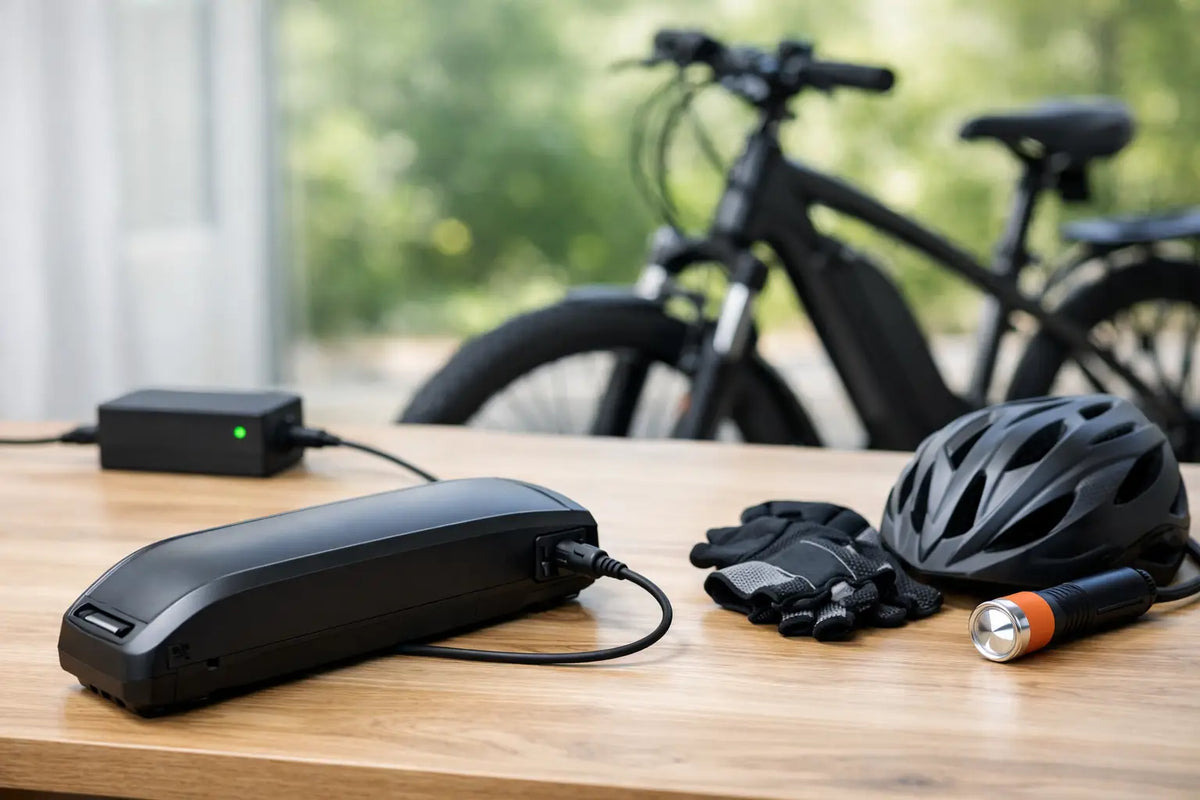
A good e-bike battery does more than add miles to your ride. It determines how confidently you tackle hills, whether your commute stays stress-free, and how long your conversion continues to deliver the performance you paid for. Treat e-bike batteries as a core part of the system, not an accessory, and your bike will be safer, more useful and far more dependable.
For riders converting a bike they already know and love, battery choice is especially important. The motor gets the attention, but the battery sets the real-world limit. It supplies the energy, supports the power demand under load and influences the weight, handling and range of the finished bike.
What e-bike battery capacity really means
Battery capacity is usually measured in watt-hours, shown as Wh. This is the most useful figure for comparing batteries because it combines voltage and amp-hours into a single measure of stored energy. A 36V 14Ah battery, for example, has around 504Wh of capacity. A 48V 15Ah battery has around 720Wh.
More watt-hours generally mean more range, but they do not automatically make a bike faster. Speed and hill-climbing performance depend on the motor, controller, assist settings, rider input, terrain, tyre pressure, bike weight and local legal limits. In the UK, road-legal electrically assisted pedal cycles are generally limited to 250W continuous rated power assistance and 15.5mph assistance.
A battery around 400Wh can suit shorter commutes, gentle leisure rides and riders who are happy to charge regularly. A 500Wh to 700Wh option is often the better all-round choice for mixed routes, regular hills or a longer daily journey. Higher-capacity packs bring useful freedom, but they also cost more and add weight. The right choice is the one that suits your actual riding, not the biggest number on the spec sheet.
Range is not a fixed promise
It is tempting to expect one range figure from a battery, but real riding does not work that way. A 500Wh pack may cover a modest daily commute with plenty left over, or it may be worked hard on a long, steep route in cold weather. Both outcomes can be perfectly normal.
Pedal-assist level has the biggest impact. Low assistance stretches range because you are doing more of the work. Higher settings are excellent for headwinds, loaded panniers and sharp climbs, but they draw more current and reduce the distance available. A mid-drive system can be particularly efficient because it uses the bike's gears, yet it still needs the rider to select a sensible gear rather than grinding up a climb in a hard gear.
Rider and luggage weight, repeated stop-start riding, strong winds, rough surfaces and underinflated tyres all increase energy use. Cold weather deserves special attention. Lithium-ion batteries deliver less usable energy when temperatures drop, so winter range can be noticeably lower. That does not mean the battery is failing. It means the conditions are demanding more from it.
Plan for range with a margin. If your round trip is 25 miles, do not buy a battery that only just covers 25 miles in ideal conditions. Leave room for detours, colder days, stronger assistance and the natural reduction in capacity that comes with age.
Choosing the right battery for your conversion
The battery must match the electrical system. Voltage is non-negotiable: a 36V motor system needs a compatible 36V battery, while a 48V system needs a compatible 48V pack. Mixing voltages can damage components or prevent the system from operating at all.
Physical fit matters too. Many conversion batteries mount on the down tube, where they keep weight low and central. That is usually the best solution for handling, provided the frame has sufficient room and secure mounting points. Rear-rack batteries can work well on some bikes, especially where frame space is limited, but they place weight higher and further back. On a heavily loaded bike, that can change how it feels through corners.
Look beyond the headline capacity. A quality pack includes a battery management system, often called a BMS, which monitors cells and helps protect against overcharging, excessive discharge, overheating and short circuits. The cells themselves, enclosure quality, mounting rail, connector and weather resistance all matter. A cheap unbranded pack may look like a saving until it develops charging issues, loses capacity early or proves difficult to support.
For practical guidance, The Bike Shack can help match a battery to the bike, rider, motor system and intended journey. That includes checking clearance, cable routing and weight distribution before the conversion is fitted.
Charging e-bike batteries safely
Charging is simple, but it should never be careless. Use the charger supplied or approved for that exact battery. Chargers are designed around a specific voltage and charging profile. A connector that happens to fit is not proof that the charger is safe.
Charge the battery on a hard, non-flammable surface in a dry, well-ventilated area. Keep it away from direct sunlight, heaters, fuel, paper, textiles and escape routes. Avoid charging overnight or when nobody is available to notice a problem. Once charging is complete, unplug the charger rather than leaving the system connected for days.
If you have just completed a demanding ride, let the battery cool before charging. Equally, do not charge a battery that is very cold after being left outdoors in winter. Bring it indoors and allow it to return gradually to room temperature first.
Do not use a battery with a cracked case, damaged terminals, loose mounting rail, unusual smell, swelling, leaking fluid or excessive heat. Stop using it immediately and arrange a professional inspection. Never open a lithium-ion battery pack yourself. The cells and electronics inside are not a home repair job.
Storage habits that protect battery life
Lithium-ion batteries do not need to be run flat before charging. In fact, regularly draining a pack to empty is harder on it than topping it up after normal use. For day-to-day riding, charge when needed and avoid making every journey a race to zero per cent.
For longer storage, such as several weeks without riding, aim to leave the battery partly charged rather than full or empty. Around 40 to 70 per cent is a sensible target. Store it in a cool, dry place indoors, away from freezing temperatures and direct heat. Check the charge level every month or two and recharge lightly if it has dropped too far.
Remove the battery from the bike when transporting it on a rear-mounted car rack. It reduces the load on the rack, protects the battery from rain and road spray, and makes the bike easier to lift. If the battery is removable, take it indoors rather than leaving it on the bike outside for long periods.
Signs your battery needs attention
All batteries gradually lose capacity. A drop in range after a few years can be normal, particularly if the bike has covered frequent commuting miles. What matters is whether the change is gradual and predictable or sudden and worrying.
A battery deserves inspection if range collapses unexpectedly, the display shuts down under load, charging stops early, the pack becomes unusually hot, or it will not lock securely into its mount. Intermittent power can also come from connectors, wiring, the controller or the battery terminals, so avoid assuming the battery is always at fault.
Keep terminals clean and dry. If you notice grime or light corrosion, switch the system off, remove the battery and clean carefully using appropriate electrical-contact methods. Do not soak connectors or force a damaged plug into place. A secure connection is essential for reliable assistance, particularly on rough roads and pothole-heavy routes.
Make every watt-hour work harder
The simplest ways to improve range are often basic bike maintenance. Correct tyre pressure reduces rolling resistance. A clean, lubricated chain and properly adjusted gears help a mid-drive motor work efficiently. Rubbing brakes, a loose wheel bearing or a slipping chain waste energy before it reaches the road.
Ride with the gears. Shift down before a hill, ease off pedal pressure during the change and let the motor assist your cadence rather than asking it to haul a hard gear at low speed. Use higher assist when it earns its place, then step it back on flatter ground. You will still arrive fresh, but with more battery in reserve.
Your battery should make riding feel easier, not introduce uncertainty. Choose a correctly matched pack, charge it with care and respond quickly to signs of damage or declining performance. That leaves you free to enjoy the point of electric assistance in the first place: more journeys, more hills and more reasons to get on the bike.