
A five-star rating means very little if the reviewer fitted the kit to a lightweight bike, rode it once on flat roads and has not had to charge it through a wet British winter. Useful conversion kit reviews tell you what happens after the exciting first ride: how the motor handles a steep climb, whether the display remains readable, how the battery performs in cold weather, and whether the bike still feels safe, balanced and dependable.
For riders considering electric assistance, reviews are a valuable starting point, not the final decision. The best conversion is one that suits your bike, your route, your fitness and the way you expect to use it every week.
What conversion kit reviews should really tell you
The headline score is the least useful part of most reviews. Look for the rider’s starting point instead. A kit that feels powerful to someone on a 10-mile canal-path commute may feel underwhelming to a rider hauling panniers up repeated hills. Equally, a reviewer who expects motorcycle-style acceleration may dismiss a refined pedal-assist system that is actually ideal for everyday cycling.
Strong reviews explain the bike used, rider weight where relevant, terrain, distance, battery size and assist level. They also say whether the kit was professionally installed or fitted at home. Those details turn an opinion into information you can use.
Pay close attention to long-term reports. Initial reactions often focus on speed and torque. After several hundred miles, riders are more likely to mention noisy bearings, loose connectors, display glitches, chain wear, brake performance and the real charging routine. This is where reliability becomes visible.
It also helps to separate a review of the product from a review of the installation. A capable motor can still feel rough if the chainline is poor, the gear sensor is absent or incorrectly set, the battery mount is not secure, or the controls are positioned awkwardly. The kit is only part of the finished bike.
Mid-drive or hub motor: read reviews in context
Motor position changes the whole riding experience. That is why comparison comments only make sense when you know which system is being reviewed.
A rear hub motor is often valued for straightforward assistance and a relatively simple drivetrain. It can be a sensible choice for flatter routes, leisure riding and riders who want dependable extra push without changing how they use their gears. Reviews may praise quiet operation and easy cruising, but check whether the reviewer mentions wheel strength, puncture access and climbing performance under load.
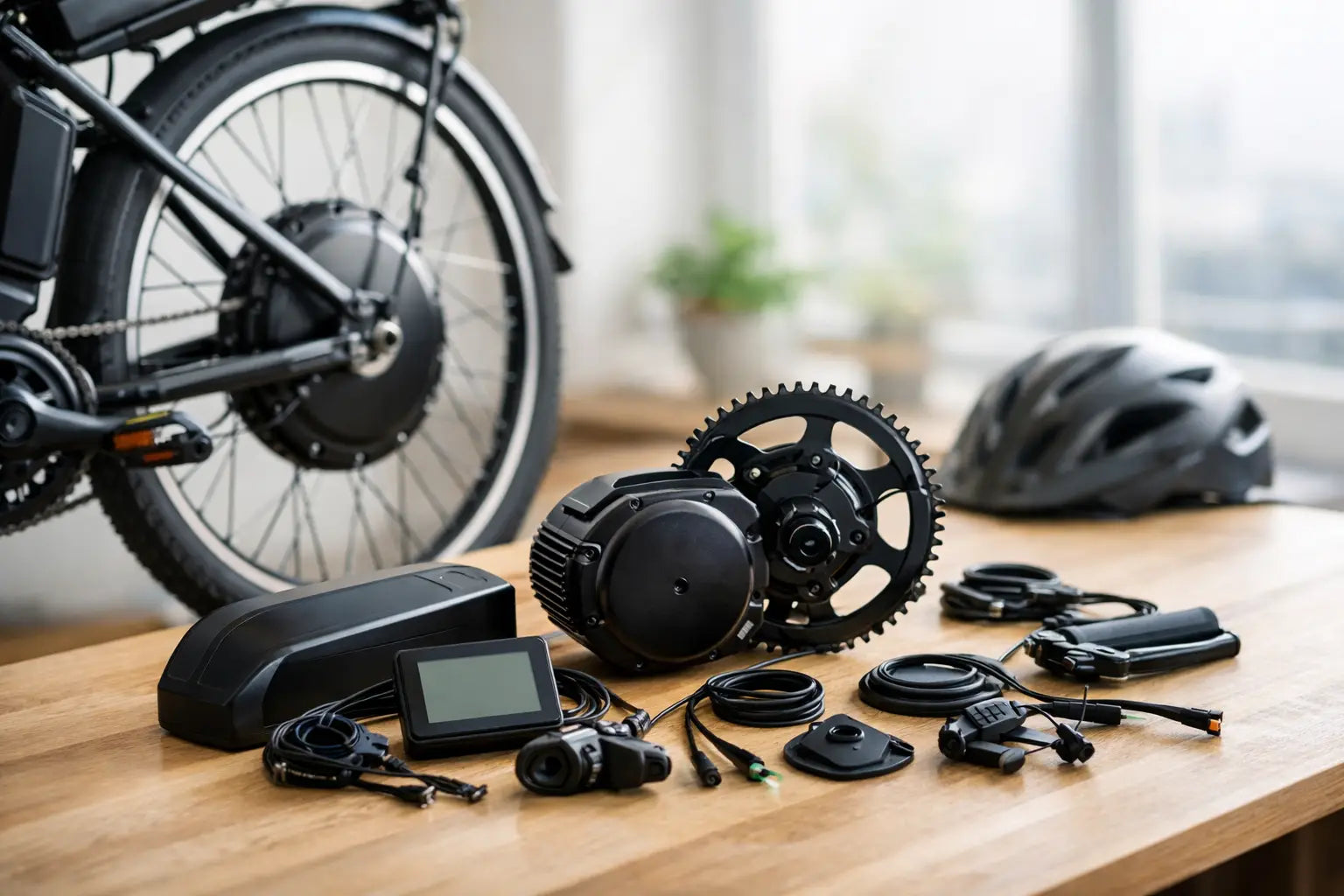
Mid-drive systems, including established options from Bafang and Tongsheng or Varstrom, send power through the bike’s drivetrain. Used with sensible gear selection, they can feel particularly effective on climbs because the motor benefits from the bike’s gears. Reviews frequently describe a more natural, responsive ride, especially with torque-sensing systems that increase assistance as you press harder on the pedals.
The trade-off is drivetrain wear. More power through the chain, cassette and chainring means neglected components will not last as long. If a review says a mid-drive is harsh on chains, do not write off the kit immediately. Ask whether the rider kept the drivetrain clean, shifted under reduced load and started with a worn cassette. A professionally assessed, well-maintained bike makes a real difference.
Range figures need a reality check
Range is one of the most quoted figures in conversion kit reviews, and one of the easiest to misunderstand. Battery capacity matters, but it is not a promise of a fixed distance. A larger watt-hour figure usually gives more potential range, yet conditions decide how much of it you use.
A heavy rider, frequent stops, strong headwinds, cold temperatures, tyre pressure, cargo, hill gradients and high assist settings all draw more energy. A rider using low assist on rolling lanes may comfortably exceed the distance reported by someone commuting through stop-start traffic with full panniers.
Look for reviews that state battery capacity in watt-hours, not simply volts or amp-hours. Watt-hours give a clearer picture of stored energy. Then compare the route and assistance setting with your own likely use. If your commute is 12 miles each way with a long hill at the end, plan for that real route, not a best-case figure recorded on a sunny day.
Battery reviews should also mention practical ownership. Is the battery easy to remove for indoor charging? Does the lock feel secure? Is the charger supplied appropriate and reliable? Are replacement batteries available? A conversion is far more useful when charging fits naturally into your routine.
Check the details that affect safe riding
A conversion kit adds weight, speed potential and new forces to a bicycle. Reviews that only discuss motor power miss the essentials. Before purchasing, look for comments on braking, wheel condition, frame compatibility and handling.
Good brakes are not an optional upgrade when you add electric assistance. The system should stop confidently in the wet, with pads, rotors or rims in sound condition and levers that feel positive. If your bike has ageing cables, tired rim brakes or poorly adjusted hydraulic brakes, deal with that before expecting more from the motor.
Wheels deserve the same attention. A rear hub conversion can place extra demands on the rear wheel, while any electrified bike is likely to cover more miles and carry more weight. A properly tensioned wheel, suitable spokes and tyres in good condition help prevent the sort of roadside problems that no motor can solve.
Frame and component compatibility matters too. Bottom-bracket dimensions, dropout spacing, chainline, cable routing and available space for a battery all need checking. A kit may technically fit yet create an awkward or poorly balanced bike. Reviews are useful for spotting recurring fitment issues, but a hands-on assessment remains the safer route when you are unsure.
UK road rules should shape your choice
For a conversion to be treated as an electrically assisted pedal cycle on public roads in Great Britain, it must meet specific requirements. Pedal assistance must cut out at 25 km/h, and the motor’s maximum continuous rated power must not exceed 250 watts. The bike must also have pedals capable of propelling it.
This is why claims about huge wattage or unrestricted speed need careful scrutiny. A review might celebrate off-road performance, but that does not automatically make the setup suitable for lawful road use. If you want a practical commuter, choose a kit and configuration designed for compliant, pedal-assisted riding rather than chasing specifications you cannot properly use on your daily route.
Throttle arrangements can be more complicated, particularly on newer conversions. If a throttle is part of your plan, get clear advice on the specific system and intended use before fitting it.
Warning signs worth taking seriously
Some negative feedback reflects an installation error or unrealistic expectations. Repeated reports of the same fault are different. If several owners mention water ingress, unreliable battery locks, unavailable spare parts, vague warranty support or a display that fails after a few months, treat it as a pattern.
Be cautious with reviews that make dramatic promises but offer no riding detail. Phrases such as “massive range” or “insane power” do not tell you how a kit behaves at a junction, on a wet hill or after six months of commuting. Likewise, very cheap kits can look attractive until you need a replacement controller, a compatible battery or someone qualified to diagnose a fault.
Support has value. Clear instructions, available parts, warranty coverage and access to knowledgeable fitting and aftercare can save far more than the initial price difference. At The Bike Shack, the focus is not just on supplying a motor and battery, but on building an electric bike that remains enjoyable to ride and straightforward to maintain.
Match the kit to the journey, not the spec sheet
Start with the route you actually ride. Consider the hills, the distance between charges, whether you carry a child seat or shopping, where the bike is stored and how confident you are with maintenance. Then consider your existing bike. A quality frame with healthy brakes, wheels and drivetrain can be an excellent foundation. A bike with worn bearings, corroded cables and weak wheels may need workshop attention first.
The right kit does not need to be the most powerful or the most expensive. It needs to make your regular ride easier without creating new worries. Read beyond the star rating, ask the questions reviewers leave unanswered, and choose a system you can support properly for the miles ahead.
A well-planned conversion should leave you looking for reasons to take the longer way home, confident that your bike is ready when the road turns uphill.