Your current bike already fits. You know how it handles, where the saddle needs to sit and which route home has the hill that catches you out. That is why the e-bike conversion versus new e-bike decision is not simply about buying more power. It is about whether to improve a bike you trust or start fresh with a purpose-built electric model.
Both routes can make commuting easier, flatten out climbs and help you ride farther without arriving worn out. The better choice depends on the condition of your existing bike, how you ride, your budget and how much value you place on familiar fit versus factory integration.
E-bike conversion versus new e-bike: the real difference
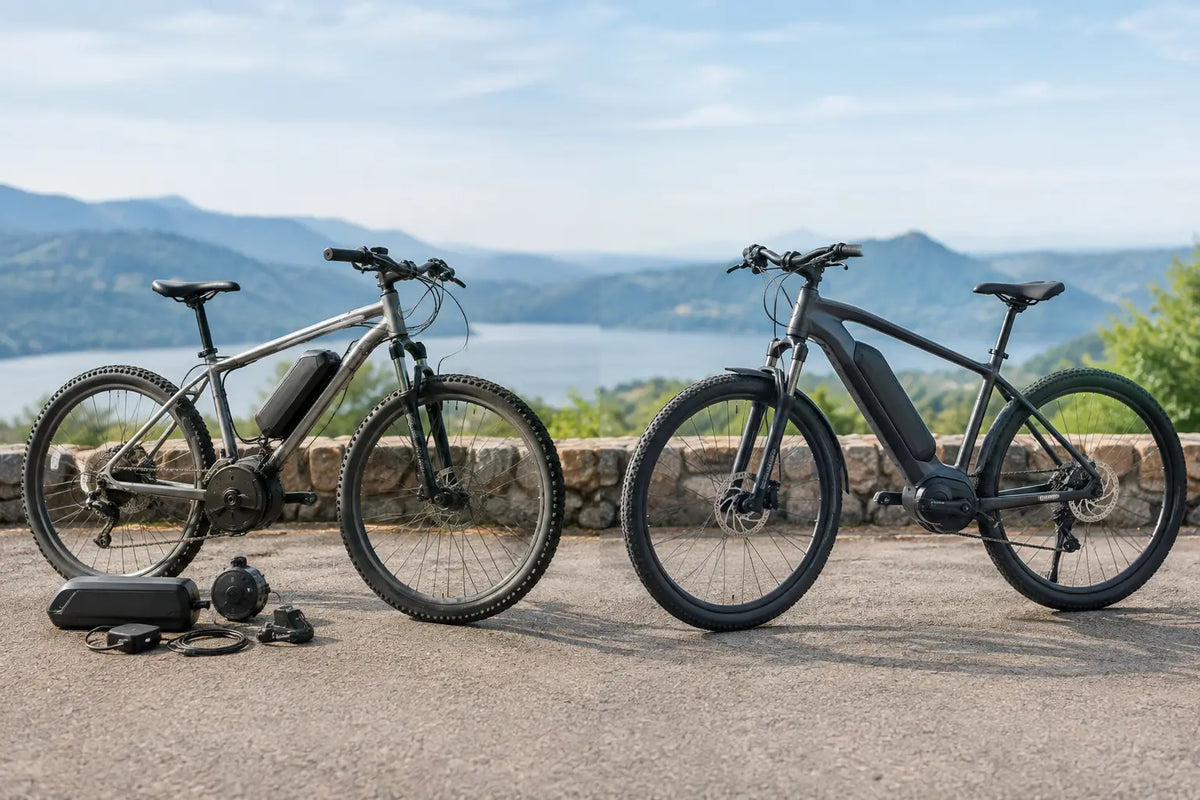
An e-bike conversion adds a motor, battery, display and controls to a standard bicycle. A new e-bike is designed around those parts from the first sketch, with its frame, wiring, brakes and component choices intended to work as one system.
That difference matters, but it does not automatically make a conversion second best. A well-chosen mid-drive kit on a sound bike can feel remarkably natural. The motor works through your bike's gears, so it can deliver useful climbing support while retaining the character of the bike you enjoy riding.
A factory e-bike generally offers cleaner cable routing, an integrated battery position and a single manufacturer warranty. It may also include e-bike-specific brakes, stronger wheels and a frame built for the extra loads of powered riding. For some riders, that complete package is worth paying for. For others, it means replacing a perfectly good bicycle before it has earned its retirement.
Start with the bike you already own
The smartest conversion begins with an honest assessment of the donor bike. Its age is less important than its condition and suitability. A quality hybrid, hardtail mountain bike, touring bike or commuter with a healthy frame can be an excellent base. A neglected bike with worn bearings, tired wheels, poor brakes and a stretched drivetrain is not a bargain simply because it is already in the shed.
Before fitting a kit, check the frame for cracks and damage, especially around the bottom bracket, head tube and dropouts. Confirm that the wheels run true, the spokes have even tension and the tyres are in good condition. Brakes should stop the bike confidently before a motor is added, not become the next job on the list.
Mid-drive systems from established names such as Bafang and Tongsheng can suit many riders because they keep weight low and central. They also make use of the bike's gears, which is particularly helpful on hilly routes. The trade-off is increased wear on the chain, cassette and chainring if shifting is rough or the drivetrain is already worn. Regular cleaning, sensible gear changes and timely replacement parts protect the ride quality you paid for.
Cost is more than the price on the tag
A conversion can cost less than a comparable new e-bike, especially when the existing bike is high quality and needs only routine preparation. You are paying for the kit, battery, installation and any sensible upgrades such as tyres, brake pads, chain or wheel work. That can be a strong value proposition because the final bike is tailored to you rather than specified for the broadest possible market.
But conversion is not always the cheaper route. If the bike needs a full service, new drivetrain, brake overhaul, replacement wheels and accessories before the motor goes on, add those costs properly. A cheap kit fitted to a tired bicycle often creates false economy, followed by disappointing range, noisy shifting and repairs that could have been avoided.
A new e-bike has a clearer upfront price and may include lights, mudguards, a rack, hydraulic brakes and a larger battery. It can be the sensible financial choice when you need all of those items anyway. Compare like with like: battery capacity, motor type, brake quality, carrying equipment, service support and warranty all affect the real value.
Ride feel: familiar bike or integrated machine?
A conversion retains the fit and handling you know. That is a major advantage for riders with a carefully adjusted saddle position, a favourite frame or a bike that already feels right on country lanes and town streets. It is also easier to choose your own contact points, tyres and gearing rather than accepting a factory specification.
The quality of the system and installation determines how natural it feels. A torque-sensing mid-drive responds to how hard you pedal, giving assistance that builds with your effort. This can feel closer to riding a stronger version of yourself. Cadence-sensing systems can offer excellent practical assistance too, although the power delivery may feel more on-or-off depending on the setup.
New e-bikes often feel more planted because their frame geometry and weight distribution were designed around the motor and battery. That can be reassuring at speed or when carrying panniers and a child seat. The downside is weight: many complete e-bikes are heavy to lift onto a train, carry up steps or manoeuvre in a narrow hallway. A conversion is not automatically lighter, but it gives you greater control over the finished build.
Safety and servicing should shape the decision
Electric assistance increases average speed, distance and the demand placed on your bicycle. That makes preparation and ongoing servicing central to a reliable build. Strong brakes, correctly adjusted gears, secure mounting hardware and a battery fitted in the right location are not optional extras.
A professionally installed conversion should be tested under load, with cables routed away from moving parts and controls positioned for safe use. The bike should also be checked after the first period of riding, when bolts can settle and a new chain or cable may need adjustment. Keep an eye on spoke tension too, particularly if you regularly ride rough roads, carry luggage or use the bike daily.
With a new e-bike, servicing remains necessary. Chains, brake pads, tyres, bearings and wheels still wear out, while the extra mass and speed can accelerate that wear. Factory integration can make diagnostics easier within a dealer network, but it can also mean you are tied to proprietary parts or software. A conversion using established, serviceable components can be a practical long-term option when local workshop support is available.
At The Bike Shack, we approach a conversion as a complete bicycle build, not a box of parts attached to a frame. That means looking at the bike's braking, drivetrain, wheels and intended use before recommending the system.
UK road rules are not a detail
For road use in Great Britain, most electric bikes need to meet Electrically Assisted Pedal Cycles, or EAPC, requirements. The motor must have a maximum continuous rated power of 250 watts, assistance must cut off at 15.5 mph, and the bike must require pedal input for normal powered riding. Riders must be at least 14 years old.
A kit can be legal, but only if the finished bicycle meets those rules. High-power kits, unrestricted settings and unsuitable throttle arrangements can move the bike into a different legal category, potentially requiring registration, insurance, a licence and other road-use requirements. Do not assume a setting in an app is harmless because it is easy to select.
Check the kit specification before purchase, keep documentation, and ask for clear advice if you are unsure. Legal assistance is still plenty useful for starts, headwinds, hills and longer commutes. The goal is dependable support you can use with confidence, not a number on a display.
When a new e-bike makes more sense
Choose a new e-bike when your current bike is structurally compromised, fundamentally uncomfortable or too costly to restore. It is also a strong option for riders who need a low-step frame, integrated cargo capability, a manufacturer-backed complete system or the cleanest possible appearance.
If you need to carry regular heavy loads, tackle high-mileage commuting in all weather or want the simplest warranty path, a purpose-built e-bike may remove decisions and deliver a more polished package. Test ride it with the loads and clothing you actually use. A short lap around a car park rarely reveals whether the gearing, reach and weight work for your real journey.
Make the choice around your journey
A conversion is often the right answer when you love your current bike, its frame is sound and you want a motor system selected around your routes. A new e-bike is often right when you need an all-in-one package, modern frame design and minimal setup choices. Neither option is automatically better.
Bring the decision back to the ride that matters most: the climb you avoid, the commute you want to arrive fresher for, or the weekend route you would take if the return journey felt less daunting. Get the bike assessed, choose reliable components and build for that journey. That is where electric assistance earns its place.