
A wheel that moves side to side can turn a smooth commute into a bike that feels vague, noisy or downright unsafe. Understanding why wheels wobble helps you spot the difference between a straightforward adjustment and a problem that needs workshop attention before your next ride.
Not every wobble feels the same. A slight side-to-side sweep at the rim is usually a truing issue. Play felt when you hold the wheel and push it sideways may point to bearings, an axle or a loose hub. A rhythmic bump through the handlebars can be caused by a tyre, damaged rim or poor tyre seating. The right repair depends on where the movement starts.
Why wheels wobble: the main causes
A bicycle wheel is a tensioned structure. The rim is held in shape by spokes pulling evenly against the hub, while bearings allow the hub to rotate smoothly around the axle. If one part moves out of specification, the wheel can lose its straight, stable feel.
Uneven spoke tension
This is one of the most common reasons for a wobbly wheel. Spokes can gradually lose tension through regular riding, particularly after potholes, kerb strikes and rough road surfaces. When one or more spokes become loose, the rim is pulled slightly towards the tighter side.
You may notice a rubbing sound as the rim brushes the brake pads, or see the rim move left and right when you spin the wheel. On disc-brake bikes, a small rim wobble is less obvious because there are no rim brake pads to reveal it, but it can still affect handling and tyre clearance.
A proper wheel true is not simply a matter of tightening the nearest loose spoke. The wheel needs to be checked for lateral movement, vertical movement and overall spoke tension. Tightening one spoke without balancing the surrounding spokes can create a temporary fix that makes the wheel less durable.
A bent or damaged rim
A hard impact can dent a rim, especially if the tyre pressure is too low for the rider, load and terrain. Look closely at the rim while spinning the wheel. A sharp hop, flat spot or visible dent may mean the rim has been damaged rather than merely pulled out of true.
Minor rim damage can sometimes be corrected, depending on the rim material and the location of the damage. However, a cracked rim, a badly dented braking surface or damage around a spoke hole usually means replacement is the safer choice. Continuing to ride it risks a sudden failure, punctures and broken spokes.
Loose hub bearings or axle play
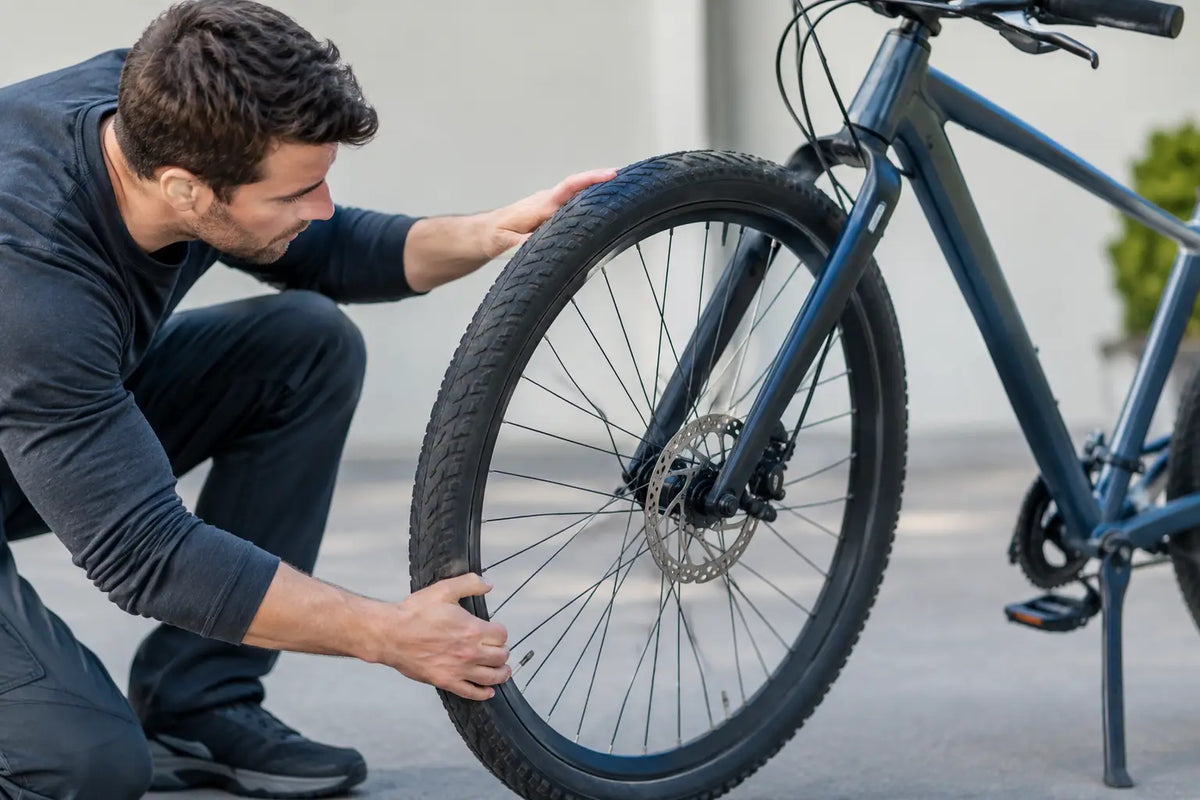
If the rim and tyre look straight but the whole wheel can rock side to side, check for bearing play. With the bike stationary, hold the tyre near the rim and gently push it from side to side. Movement that comes from the hub, rather than the rim flexing, often indicates loose cone bearings, worn cartridge bearings or a loose axle fitting.
Bearing issues can make steering imprecise and place extra stress on the brake rotor or rim brakes. On a front wheel, that instability is especially noticeable under braking. Some cup-and-cone hubs can be adjusted; sealed cartridge bearings generally need replacing once worn or rough. The correct solution depends on the hub design and condition.
Tyre and tube problems that feel like a wobble
Sometimes the wheel is true but the tyre is not sitting evenly on the rim. This can happen after a puncture repair, tyre change or inflation with the bead not fully seated. As the wheel turns, the tyre rises and falls, creating a bumping sensation that can feel like a warped rim.
Check the moulded line around the tyre sidewall. It should sit at an even distance from the rim all the way around on both sides. If it disappears into the rim in one area or sits unusually high, deflate the tyre, inspect the bead and refit it carefully. A damaged tyre casing can also create a persistent bulge and should be replaced.
Broken, bent or fatigued spokes
One broken spoke can pull a wheel noticeably out of line, particularly on the rear wheel where spoke loads are higher. You might hear a ping, find a loose spoke end or notice that the wheel has suddenly started rubbing the frame or brake.
Replacing the spoke is only part of the job. A good repair includes checking the remaining spokes, bringing the wheel back into true and balancing tension across the build. If several spokes are corroded, repeatedly breaking or showing fatigue, rebuilding or replacing the wheel may offer better value than individual repairs.
Is it safe to ride with a wobbly wheel?
It depends on the cause and severity, but caution is the smart call. A barely visible rim deviation may be manageable for a short, gentle ride to a repair shop if the tyre clears the frame and brakes. A wheel with obvious side play, a loose axle, cracked rim, broken spoke, bulging tyre or brake rub severe enough to slow the wheel should not be ridden.
Do not try to force a wheel through tight rim brakes by opening the brake pads wide and carrying on as normal. You may remove an early warning sign while leaving the wheel problem unresolved. On an e-bike, the extra speed, bike weight and motor torque make wheel condition even more critical.
If the wobble appeared suddenly after hitting a pothole or kerb, inspect the wheel before riding further. Check that the quick-release lever or thru-axle is fully secure, the tyre is inflated and seated correctly, and there are no cracks at the rim or hub. If anything looks doubtful, stop and get it checked.
How to check where the wobble comes from
Start with the bike supported so the wheel can spin freely. You do not need a workshop stand for a basic inspection - carefully turning the bike upside down can work, provided the saddle and handlebars are protected.
Spin the wheel and watch the rim pass a fixed point, such as a brake pad or a cable tie lightly positioned near the rim. If the gap changes side to side, the wheel has lateral run-out. If the rim rises and falls, it has radial run-out, often called a hop.
Next, hold the tyre at the top and gently rock it sideways. If you can feel a click or movement at the hub, investigate the bearings and axle. Finally, inspect the tyre bead and squeeze pairs of spokes gently to compare tension. Do not use spoke feel alone to true a wheel, but a spoke that is dramatically looser than its neighbours is a useful warning sign.
When wheel truing is the right fix
Wheel truing is ideal when the rim is fundamentally sound and the issue is uneven spoke tension. A technician uses a truing stand and spoke key to make controlled adjustments, checking both the side-to-side line of the rim and its roundness. The goal is a wheel that is straight, evenly tensioned and able to stay that way.
A basic true can be cost-effective for a wheel that has drifted slightly out of line through normal use. But there is a limit. An inexpensive, heavily worn wheel with corroded spokes, tired bearings and a damaged rim may not hold a true for long. In that case, replacement can be the more reliable investment.
For rear wheels, cargo bikes and converted e-bikes, consider a stronger rebuild when repeated problems occur. These wheels carry more load and transmit greater torque. A well-built wheel with suitable spokes, correct lacing and properly matched components pays back in fewer roadside issues.
Preventing future wheel wobble
The simplest protection is correct tyre pressure. Under-inflated tyres increase the chance of rim strikes, while excessive pressure can reduce grip and ride comfort. Use the tyre's stated pressure range as a starting point, then adjust for rider weight, luggage, tyre width and road conditions.
Avoid dropping off kerbs and hitting potholes where possible, especially with a loaded bike. Check spoke tension and wheel alignment periodically, and inspect wheels after a crash or hard impact. Keep hubs serviced so bearings run smoothly rather than developing damaging play.
For e-bike riders, use wheels rated for the job and keep an eye on spoke tension during the first few hundred miles after a conversion or new wheel build. Motor assistance does not automatically cause wheel problems, but it can expose a weak or poorly tensioned wheel sooner.
A wheel should disappear beneath you: straight tracking, quiet spinning and predictable braking. If yours is trying to tell you otherwise, a timely inspection from a workshop such as The Bike Shack can turn a small adjustment into many more confident miles.